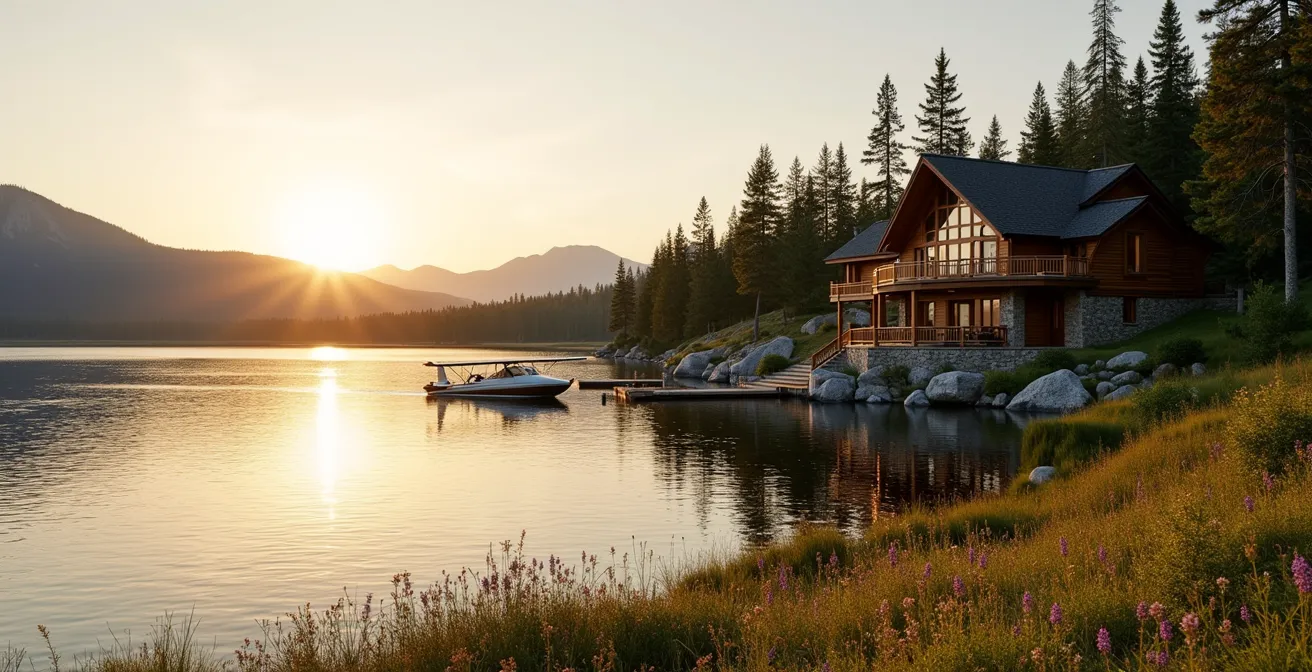
Owning a Canadian pourvoirie is less about real estate and more about acquiring and mastering a complex, capital-intensive remote hospitality business.
- The true value of the asset is found in its unique portfolio of legal rights (exclusive, leased, permits), not just the physical land and buildings.
- Profitability is dictated by mastering operational logistics and creating year-round revenue through service diversification, not just relying on a successful hunting season.
Recommendation: Your due diligence must pivot from a property appraisal to a business valuation. Focus on historical cash flow (EBITDA), operational liabilities, and the strength of the rights portfolio.
For the high-net-worth investor, the allure of a Canadian pourvoirie, or outfitting operation, is undeniable. It represents a tangible piece of the vast wilderness, a legacy asset, and a departure from traditional financial instruments. The common perception is that you are buying a premier fishing or hunting lodge—a kind of supercharged cottage with commercial rights. This is the single most dangerous misconception an investor can have. The reality is that you are not acquiring a piece of real estate; you are acquiring a vertically-integrated, remote logistics and luxury hospitality company that happens to operate in a beautiful setting.
Most advisors will focus on the obvious: the quality of the fishing, the health of the game populations, and the beauty of the lodge. While important, these are merely table stakes. The success or failure of your investment will hinge on factors far less glamorous: the nuances of land use permits, the brutal economics of a float plane, the challenge of staffing a five-star kitchen in the boreal forest, and the relentless demands of off-grid infrastructure. This is a business of operational leverage, where mastering the supply chain and guest experience-as-a-service (EaaS) is what separates a profitable enterprise from a capital-draining hobby.
This guide moves beyond the romanticized brochures to provide a broker’s-eye view of a pourvoirie as a serious business asset. We will dissect the key operational and financial components that truly define its value, equipping you with the right questions to ask before you sign any purchase agreement. We will explore the legal foundations of your purchase, the human capital required for luxury service, the strategies for year-round revenue, and the unforgiving costs of remote operations. Ultimately, we will analyze how to value this unique asset class, focusing on the metrics that matter to a sophisticated investor.
This article provides a structured analysis for potential investors, breaking down the complexities of acquiring a Canadian wilderness lodge. The following summary outlines the key areas of due diligence we will cover, from legal rights to financial valuation.
Summary: The Investor’s Guide to Buying a Canadian Pourvoirie
- Leased Rights vs. Exclusive Rights: What Are You Actually Buying in a Pourvoirie?
- How to Find and Keep a 5-Star Chef in the Middle of the Boreal Forest?
- Beyond Hunting Season: How to Pivot a Lodge to Eco-Tourism in Summer?
- Generators and Float Planes: The Heavy Equipment Costs of Fly-In Lodges
- How to Value a Pourvoirie: EBITDA or Asset Value?
- Snowmobiling from Your Doorstep: The Unique Perks of Northern Properties
- Solar and Composting Toilets: The Reality of Managing Off-Grid Rentals
- Investing in Campgrounds: A Real Estate Play or a Service Business?
Leased Rights vs. Exclusive Rights: What Are You Actually Buying in a Pourvoirie?
The first critical error an investor makes is confusing land ownership with operational rights. In Canada, especially in provinces like Quebec and Ontario, the most valuable asset you acquire with a pourvoirie is often not the deeded land itself, but a complex rights portfolio. This bundle can include exclusive rights to hunt and fish over a vast territory, long-term leases on Crown land, specific animal tag allocations, and various Land Use Permits (LUPs). Understanding the difference between a 99-year lease for your lodge and an exclusive, government-granted outfitting territory of 100 square kilometers is fundamental. The former is real estate; the latter is a protected monopoly that generates your revenue.
An exclusive rights territory is a government-sanctioned barrier to entry against competitors. A leased-right area might offer access, but potentially alongside other users, diluting the premium experience you can offer. Your due diligence must obsessively scrutinize the nature, duration, and transferability of these rights. Are they automatically renewed? What are the government’s powers to revoke or alter them? A pourvoirie with weak, short-term, or non-exclusive rights is a significantly riskier, and therefore less valuable, business, regardless of how luxurious its buildings are. This is where legal counsel specializing in Canadian resource and property law is non-negotiable.

As the image suggests, these rights are formalized in complex legal documents that form the true foundation of the business. The value is locked in the ink and seals of these government certificates. An investor must verify every detail, from allocated Bear Management Areas (BMAs) to the specific fish species covered by a permit. Neglecting this deep dive into the legal framework is akin to buying a commercial building without verifying its zoning.
Your Action Plan: Key Due Diligence Steps for Pourvoirie Rights
- Engage Specialized Counsel: Immediately retain a solicitor for legal offer issues, an accountant for tax and corporate planning, and an environmental consultant to audit fuel tanks and septic systems.
- Consult Government Officials: Meet with the Ministry of Natural Resources (MNR) or its provincial equivalent to discuss fisheries, wildlife/hunting regulations, remote access, and forestry issues. Contact the Ministry of Tourism for insights on marketing trends and staffing programs.
- Review Lodge-Specific Rights: Conduct a deep audit of all permits, including hunting BMAs, species-specific allocation tags, and all active Land Use Permits (LUPs) to confirm their status and transferability.
- Prepare Financing: For a formal offer, be prepared to provide a deposit, typically around 10% of the purchase price, which will be held in the trust account of the listing real estate brokerage.
How to Find and Keep a 5-Star Chef in the Middle of the Boreal Forest?
A luxury wilderness experience is sold on isolation but delivered through sophisticated service. Nowhere is this more apparent than in the kitchen. For a high-net-worth clientele paying a premium, the quality of the cuisine is not an amenity; it is a core component of the product. The challenge is attracting and retaining top-tier culinary talent in a location hundreds of kilometers from the nearest city. This is not a typical HR problem; it is a specialized logistical and lifestyle challenge. You are competing for talent not just with other lodges, but with every urban fine-dining establishment in the country.
The financial commitment is significant; data shows that executive chefs in Canada can earn between $42,841 and $62,937 CAD per year, and for a remote, high-pressure role, you should expect to be at the very top of that range, if not beyond it. However, money alone is insufficient. The most successful remote operators have engineered a specific lifestyle to attract talent. The industry standard is often a rotational schedule, such as “3 weeks on, 3 weeks off.” This model provides intense work periods followed by long breaks, appealing to a certain type of professional who values large blocks of personal time. Your business model must account for the cost of not just one chef, but potentially 1.5 or 2 full-time equivalent salaries to cover these rotations, plus travel costs to fly them in and out.
Beyond compensation and scheduling, the quality of the work environment is paramount. A top chef will not tolerate a poorly equipped kitchen. Your capital plan must include commercial-grade appliances, reliable power, and a well-managed supply chain for fresh ingredients—all significant expenses in an off-grid setting. Retaining this talent means building a culture of respect, providing creative freedom, and ensuring their living quarters are comfortable. Underestimating the human and capital cost of the culinary program is a direct path to failing the expectations of a luxury clientele.
Beyond Hunting Season: How to Pivot a Lodge to Eco-Tourism in Summer?
A traditional pourvoirie operating only during the short hunting and fishing seasons is a fundamentally flawed business model for a modern investor. It leaves a multi-million dollar asset dormant for more than half the year. The key to maximizing ROI is seasonality diversification. Pivoting a lodge to cater to the burgeoning eco-tourism, wellness, and adventure travel markets during the summer and winter months transforms it from a seasonal operation into a year-round hospitality business. This isn’t just about adding a few canoes; it’s a strategic repositioning of the entire service offering.
Summer operations can focus on low-impact, high-value activities. These include:
- Guided fishing, canoeing, and kayaking expeditions.
- Wildlife and bird watching tours, particularly appealing to photographers.
- Hiking, mountain biking, and water sports like rafting.
Winter presents another high-potential season, especially in northern latitudes. Offerings can include guided cross-country skiing, dog sledding, ice fishing, and snowshoeing. For lodges in the right location, creating packages around viewing the aurora borealis can be a powerful draw for international tourists. For example, some lodges in the Northwest Territories market full-service winter packages that include Northern Lights viewing and access by ski plane, turning the remoteness into a key selling point.
A particularly lucrative pivot involves integrating authentic cultural experiences. Partnering with local First Nations communities to offer guided storytelling, traditional craft workshops, or culinary events can create a unique, premium product. Market data supports this strategy; studies show that Indigenous tourism experiences in Canada can command a 25% premium over regional averages. This approach not only adds a revenue stream but also builds a deeper, more meaningful brand story that resonates with modern luxury travelers seeking authenticity.
Generators and Float Planes: The Heavy Equipment Costs of Fly-In Lodges
The pristine isolation of a fly-in lodge is its greatest marketing asset and its largest operational liability. The term “off-grid” sounds romantic, but for an investor, it translates to being solely responsible for a private municipality’s worth of infrastructure. Every watt of electricity, every drop of clean water, and every litre of fuel must be generated or transported at immense cost. This is the concept of logistical drag, where the hidden costs of remote operations can severely erode profitability. Your due diligence must include a thorough audit of all heavy equipment and infrastructure, as their replacement cost is astronomical.
The heart of a remote lodge is its power system, typically a set of large diesel generators. You need redundant systems for reliability, and a significant capital budget for fuel, which must be flown in by the barrel. Similarly, water purification and wastewater treatment (septic) systems must be robust and meet stringent environmental regulations. The float plane, often the iconic symbol of the lodge, is a business unit in itself. It requires a licensed pilot, regular high-cost maintenance, insurance, and a constant supply of aviation fuel. Forgetting to factor in a $100,000 engine overhaul or the cost of a new set of floats can be a catastrophic financial oversight.

The sheer scale of capital required is often underestimated. While costs vary, a recent analysis of the Canadian hospitality market provides a sobering benchmark. This report can help contextualize the immense capital investment required for new developments in this sector.
| Cost Category | Amount (CAD) | Details |
|---|---|---|
| Average Development Cost per Key | $900,000 | Equivalent to USD $662,000 |
| Location Strategy | Lower costs | Achieved via suburban plots with cheaper land |
While this figure includes various types of hospitality, it highlights that creating a single guest room in a new Canadian development can approach seven figures, a cost that is only magnified by the logistical challenges of a remote location. As an investor, you are not just buying a lodge; you are buying a private power plant, a water treatment facility, and a small airline. A comprehensive asset and replacement cost analysis is therefore essential.
How to Value a Pourvoirie: EBITDA or Asset Value?
How do you place a dollar value on a complex asset like a pourvoirie? Sellers will often anchor the price to the replacement value of the buildings, docks, and equipment. This is the “asset value” approach. As a savvy investor, you must recognize this for what it is: a starting point, but not the basis for your offer. You are buying a business, and a business is valued on its ability to generate cash. Therefore, the primary valuation metric must be a multiple of its EBITDA (Earnings Before Interest, Taxes, Depreciation, and Amortization).
The core principle of business valuation for lodges and resorts is that the business value is determined by its cash flow and profitability. The replacement value of the physical assets simply supports and justifies that cash-flow-based valuation. A beautiful, newly built lodge that consistently loses money is worth less as a going concern than an older, well-maintained lodge that produces strong, predictable cash flow. Your first request in due diligence should be for at least three to five years of detailed financial statements to calculate a normalized EBITDA.
What is a reasonable multiple to pay? This depends on numerous factors, including the quality of the assets, the security of the rights portfolio, and the stability of the earnings. For context, some analyses of the broader hospitality business show an average EBITDA margin of around 16%. A highly profitable pourvoirie with exclusive rights and a diversified, year-round revenue stream might command a higher multiple (e.g., 5-7x EBITDA), while a seasonal, riskier operation might trade for a lower multiple (e.g., 3-4x EBITDA). The final valuation is a blend: a defensible EBITDA multiple, supported by an appraisal of the underlying real estate and assets. If the cash flow doesn’t support the asking price, the investor must be prepared to walk away, no matter how magnificent the property.
Snowmobiling from Your Doorstep: The Unique Perks of Northern Properties
While diversifying into general eco-tourism is a broad strategy, a successful pourvoirie often identifies and dominates a specific, high-value niche. For many northern properties, that niche is snowmobiling. Unlike a generic hotel, a wilderness lodge can offer a truly unique “stay and ride” experience: direct, doorstep access to hundreds or even thousands of kilometers of pristine, groomed trails and backcountry terrain. This is a powerful perk that can anchor an entire winter season’s revenue.
Integrating snowmobile tourism is not a passive activity. It requires strategic investment and planning. The most critical step is ensuring the property has direct access to the official provincial trail networks, such as the OFSC (Ontario Federation of Snowmobile Clubs) or FCMQ (Fédération des clubs de motoneigistes du Québec) systems. Being a key stop on a major touring loop instantly puts your lodge on the map for thousands of riders. This means creating a dedicated offering that caters specifically to this market, including secure sled parking, a drying room for gear, and on-site fuel availability.
To capture the highest value, operators should move beyond simple accommodation and create all-inclusive packages. These can include guided backcountry tours, avalanche safety training for mountain locations, and partnerships with local rental businesses for guests who don’t own a sled. Hiring guides who are certified by a body like the Canada Safety Council adds a layer of professionalism and safety that justifies premium pricing. Furthermore, it is absolutely essential to work with an insurance broker to secure the appropriate liability riders and waivers for any guided tours or rentals. By transforming the property into a full-service snowmobiling hub, a pourvoirie can turn the “off-season” into a highly profitable and distinct business line.
Solar and Composting Toilets: The Reality of Managing Off-Grid Rentals
The daily reality of managing an off-grid pourvoirie is a relentless battle against entropy. Every system, from power generation to waste disposal, is a potential point of failure that can’t be fixed with a quick call to a utility company. While modern technologies like solar panels and composting toilets can reduce the operational footprint and appeal to eco-conscious guests, they introduce new layers of management complexity. An investor must look past the “green” marketing and assess the resilience and maintenance requirements of these systems.
A solar array is an excellent supplement to a diesel generator, reducing fuel costs and noise. However, it requires a significant upfront capital investment in panels, inverters, and, most importantly, a large battery bank to store power for nighttime and cloudy days. These batteries have a finite lifespan and are a major future replacement cost. Similarly, composting or incinerating toilets can solve many of the challenges of remote septic systems, but they require diligent maintenance, specific additives, and guest education to function properly. A mishandled system can quickly create an unpleasant experience that undermines the luxury promise.
This operational reality is compounded by the severe labor shortage facing the Canadian hospitality sector. Finding a general manager who is also a competent off-grid mechanic, plumber, and power systems engineer is nearly impossible. This means you must have reliable, and expensive, service contracts with technicians willing to travel to your remote location. The sheer scale of this challenge is illustrated by operations like the Dorval Lodge on Quebec’s Dozois Reservoir, which operates as the sole resort across 4,000 kilometers of water circumference. This demonstrates the immense self-sufficiency required. The cost of a failed generator isn’t just a repair bill; it’s lost revenue from cancelled bookings and a damaged reputation.
Key Takeaways
- A pourvoirie is a service-intensive hospitality business, not a passive real estate investment. Its value is driven by cash flow (EBITDA), not just asset appraisal.
- The most critical asset is often the portfolio of exclusive or leased rights, which creates a government-sanctioned monopoly and barrier to entry.
- Profitability depends on mastering remote logistics (power, transport, supply chain) and diversifying revenue beyond a single hunting/fishing season.
Investing in Campgrounds: A Real Estate Play or a Service Business?
To crystallize the unique nature of a pourvoirie investment, it’s useful to contrast it with a seemingly similar asset: a campground. A basic campground can often be treated as a real estate play. Its revenue is generated from renting designated plots of land, and its service requirements are relatively minimal: washrooms, utilities, and site maintenance. An investor can reasonably focus on land value, occupancy rates, and potential for development.
A pourvoirie, by contrast, is fundamentally a service business. While it occupies land, its revenue is derived from selling a curated, high-touch experience. The client is not paying for a patch of dirt; they are paying for expert guiding, gourmet meals, comfortable lodging, and seamless logistics. This makes management infinitely more complex. The success of the business is tied directly to the quality of its staff and its operational execution. This distinction helps frame the type of investment you are making and the type of management it will require.
When evaluating a pourvoirie, it’s helpful to categorize the opportunity, much like any other business acquisition. The management focus and required capital will differ dramatically depending on the state of the existing operation.
| Business Type | Category | Management Focus |
|---|---|---|
| Turn-key Operations | Profitable and well-run | Maintain and optimize existing systems |
| Fix-ups | Needing physical improvements | Significant capital investment required |
| New Management Needed | Poor revenues and profits | Complete operational overhaul required |
Ultimately, investing in a pourvoirie is a commitment to the service industry in its most challenging form. It demands a hands-on approach or a highly compensated, expert management team. It is an asset class that offers immense rewards and a unique legacy, but only for the investor who understands they are buying an operating company, not just a cottage in the woods.
For the discerning investor ready to move beyond theoretical analysis, the next logical step is to engage a specialized broker to identify and perform due diligence on qualified, off-market opportunities that align with your financial goals.