Choosing a home near a cultural institution is a strategic investment in your family’s intellectual and financial future, not just a lifestyle choice.
- Proximity creates “intellectual dividends” through spontaneous learning and engagement.
- Iconic architecture and the “Bilbao Effect” can significantly increase neighbourhood desirability and property values.
Recommendation: Evaluate neighbourhoods not just on amenities, but on their capacity to provide ‘cultural capital’—a measurable asset for personal growth and long-term equity.
For the discerning urban family, the search for a new home transcends a checklist of bedrooms and square footage. It’s a quest for an environment, a community that enriches and inspires. We’re often told the key to urban happiness lies in walkability to cafes and parks. This conversation, however, often overlooks a more profound asset: cultural proximity. The quiet, consistent hum of intellectual energy that emanates from museums, galleries, and cultural centres is more than a weekend diversion; it’s a daily influence on our quality of life and a powerful, often underestimated, driver of property value.
But what if the real value isn’t just about having something to do on a rainy Saturday? What if choosing a home within walking distance of a museum is a deliberate act of investing in your family’s cultural capital? This perspective shifts the decision from a simple lifestyle amenity to a long-term strategy for intellectual growth and financial appreciation. It’s about creating a home where curiosity is nurtured by the very streets you walk, and where your property is anchored to an institution dedicated to preserving and celebrating human creativity and history.
This article moves beyond the surface-level benefits to explore the deeper mechanics of this value. We will dissect the “museum premium” on real estate, examine how these institutions can regenerate entire districts, and weigh the practical financial benefits against the inevitable lifestyle frictions. Ultimately, we will build a case for seeing your next home not just as a shelter, but as a launchpad for a richer intellectual life.
This comprehensive guide delves into the tangible and intangible returns of investing in a culturally-rich neighbourhood. Explore the financial implications, the transformative power of iconic institutions, and the practical realities of daily life in the city’s artistic heart.
Table of Contents: The Value of Cultural Capital in Urban Real Estate
- The “Museum District” Premium: Is It Worth Paying More to Walk to the Science Centre?
- The Bilbao Effect: How New Museums Transform Run-Down Neighborhoods?
- Annual Passes vs. Single Tickets: How Locals Save on Cultural Outings?
- Nuit Blanche and Festivals: The Downsides of Living in the Cultural Quarter?
- Museum Architecture: How Iconic Buildings Impact the Views and value of Neighbors?
- Why Living Above a Restaurant in Old Montreal Is Not Always Romantic?
- Why New “Dix30” Style Neighborhoods Are Attracting Millennial Families?
- Plateau & Mile End: How to Join the Artistic Vibe Without Overpaying
The “Museum District” Premium: Is It Worth Paying More to Walk to the Science Centre?
The notion of a “museum premium” is a well-documented phenomenon in major global cities. It’s the measurable increase in property value for homes located in close proximity to significant cultural institutions. This isn’t just about prestige; it’s a reflection of the desirability of a lifestyle centered on intellectual and artistic engagement. In New York, for instance, apartments along Museum Mile command some of the city’s highest prices, often reaching into the tens of millions for prime locations. While Canadian markets operate on a different scale, the principle remains the same in cities like Toronto, Vancouver, and Montreal.
Paying this premium is less about the convenience of a short walk to an exhibit and more about buying into a curated environment. As an analysis of Houston’s Museum District highlights, it’s an investment in a lifestyle that prioritizes culture and convenience. These neighbourhoods offer a rich, stimulating environment that attracts a stable, educated demographic, which in turn contributes to neighbourhood stability and prestige. The presence of universities and medical centers, often co-located in these districts, further solidifies their status as sound real estate investments with strong potential for land value appreciation.
For a family, this translates into an intellectual dividend. Children grow up in an atmosphere where learning and art are part of the daily landscape, not a special occasion. The question is not just whether you can afford the premium, but whether you can afford to miss out on the non-financial returns that such an environment provides. It’s a calculation that weighs immediate cost against long-term enrichment.
The Bilbao Effect: How New Museums Transform Run-Down Neighborhoods?
The term “Bilbao Effect” entered the urbanist lexicon after the 1997 opening of the Guggenheim Museum Bilbao, which transformed a declining industrial city in Spain into a world-renowned cultural destination. It describes the phenomenon where a single, spectacular piece of architecture—a new museum or gallery—acts as a catalyst for urban regeneration, attracting investment, tourism, and new residents, thereby revitalizing an entire area. This isn’t just about building a new attraction; it’s about making a bold statement of cultural ambition that can redefine a neighbourhood’s identity and future.
Canada has its own powerful example of this effect. The construction of the Canadian Museum for Human Rights in Winnipeg transformed a historically significant but underutilized area at The Forks. This national museum, the first of its kind dedicated to human rights, created a new architectural landmark and a potent symbol for the city. It drew international attention, spurred adjacent development, and solidified The Forks as a central hub for both residents and visitors, demonstrating how a single cultural project can have a ripple effect on the local economy and urban landscape.
This transformative power is rooted in a fundamental human desire for enriching environments. As a report from Wonderful Museums notes, the trend towards living near such institutions reflects a growing desire among discerning homeowners for environments that “nourish the soul and intellect.” A landmark museum does more than just attract tourists; it signals a community’s investment in its own cultural capital, making it a more desirable place for people to live, work, and invest their own resources and energy.
Annual Passes vs. Single Tickets: How Locals Save on Cultural Outings?
For residents of culturally dense neighbourhoods, the cost of frequenting museums and galleries can accumulate. However, living locally unlocks a suite of savings strategies that casual visitors often miss. The most significant advantage is the ability to leverage annual memberships and passes, which transform a high per-visit cost into a negligible recurring expense. An annual family pass to a major institution like the Art Gallery of Ontario (AGO) or the Montreal Museum of Fine Arts often pays for itself in just two or three visits, making spontaneous, hour-long trips to see a single exhibit not just possible, but financially astute.
This model encourages a deeper, more organic relationship with the institution. Instead of a marathon day-trip, the museum becomes a “third place”—an extension of the neighbourhood living room. Federal initiatives further support this accessibility; for instance, the Cultural Access Pass program grants new Canadian citizens free admission to over a thousand institutions, fostering a nationwide culture of engagement. This governmental support underscores the perceived public good of cultural access.
For the strategic Canadian family, optimizing cultural spending is an art form. It involves looking beyond single-institution memberships to broader networks and local programs that offer substantial value and variety.
Your Action Plan: Strategic Pass Options for Canadian Museum-Goers
- Research museum membership reciprocity networks, such as those available to members of the Canadian Museums Association (CMA), which can grant access to institutions across the country.
- Leverage local library museum pass programs, like Toronto’s innovative MAP Pass or the Vancouver Inspiration Pass, which offer free access to a wide array of cultural venues.
- Consider proximity benefits; museums located near other major attractions allow for efficient “two-for-one” family outings, maximizing time and travel costs.
- Evaluate ‘Supporter’ and ‘Patron’ level memberships, which often come with added benefits like networking events, exclusive previews, and valuable tax-deductible receipts.
- Time your visits around free admission days or evenings, a common practice at major Canadian institutions that makes cultural access completely frictionless.
Nuit Blanche and Festivals: The Downsides of Living in the Cultural Quarter?
The vibrancy that makes a cultural district so appealing is a double-edged sword. While the energy of festivals, gallery openings, and city-wide events like Nuit Blanche is a major draw, it also creates what can be termed lifestyle friction. For residents, the very events that animate their neighbourhood can also disrupt their peace and quiet. The annual Museum Mile Festival in New York, for example, closes a major avenue to traffic to create a pedestrian arts celebration—a wonderful community event that simultaneously creates access challenges for those who live within the festival’s footprint.
In Canada, living in Toronto’s Entertainment District during the Toronto International Film Festival (TIFF) or near the Quartier des Spectacles in Montreal during the Jazz Festival means navigating street closures, immense crowds, and a significant increase in noise levels. These are not minor inconveniences; they can affect daily routines, from commuting to simply finding a quiet evening at home. Parking becomes a competitive sport, and a quick trip to the grocery store can turn into a logistical puzzle. For families with young children, late-night noise can be a particular challenge.
This is the paradox of the cultural quarter: you are paying a premium for proximity to an energy that you may sometimes wish to escape. The key is a balance of mindset and practicality. Successful residents embrace the seasonal ebb and flow of their neighbourhood’s energy, planning around major events and appreciating the unique spectacle unfolding on their doorstep.

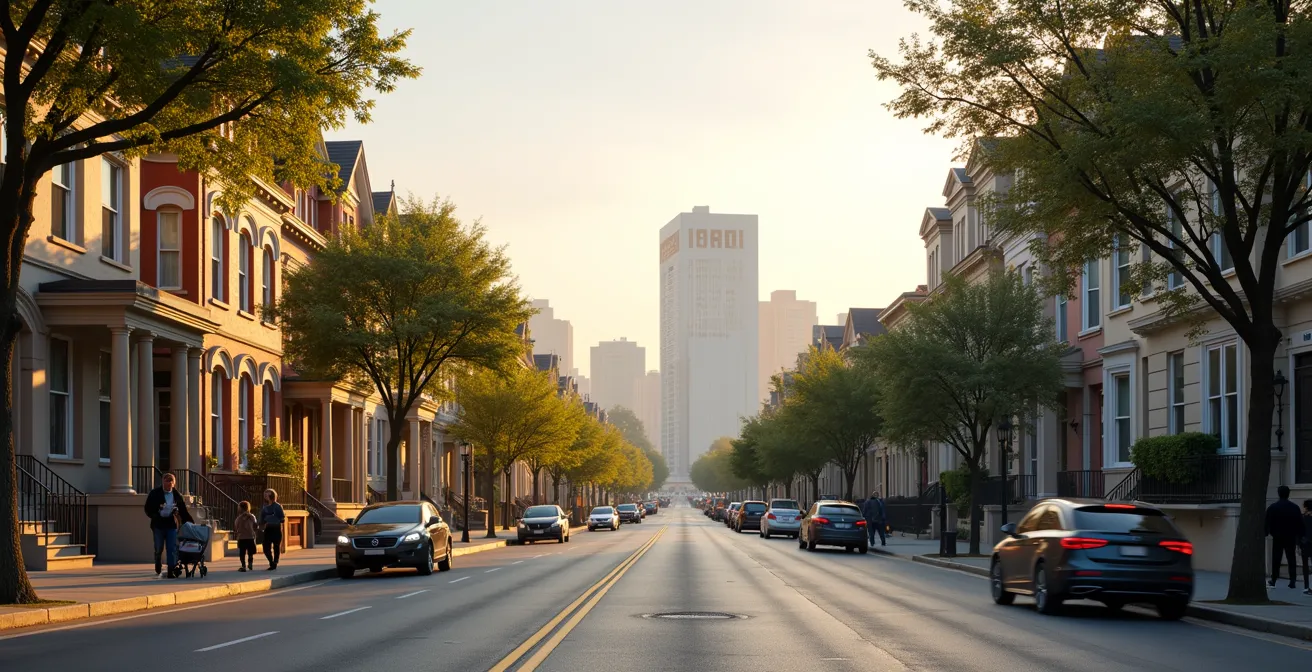
As this image suggests, there is a beauty in being close to the action while retaining a sense of private sanctuary. The decision to live here requires an honest assessment of one’s tolerance for this inherent friction. It is a trade-off between serene predictability and the stimulating, sometimes chaotic, pulse of urban cultural life.
Museum Architecture: How Iconic Buildings Impact the Views and Value of Neighbors?
Museums are no longer just containers for art; they are often works of art themselves. The rise of “starchitect”-designed institutions, from the Royal Ontario Museum’s Michael Lee-Chin Crystal in Toronto to the National Music Centre’s Studio Bell in Calgary, has profound implications for the surrounding residential landscape. This architectural symbiosis—the interplay between the institution’s design and the neighbouring buildings—directly impacts both the aesthetic environment and the financial value of nearby properties.
On one hand, living next to an architectural icon can provide unparalleled views and a unique sense of place. A residence overlooking a stunningly designed museum possesses a scarcity value that cannot be replicated. This visual appeal directly translates into a property value premium. The building becomes a permanent, unblockable feature of your window’s vista, a piece of the city’s skyline that you have a front-row seat to. National bodies are keenly aware of this; Statistics Canada’s ongoing collection of property assessment data helps quantify how such unique features influence taxation and market values across the country.

On the other hand, the very grandeur of these buildings can create challenges. The scale, materials, and lighting of a modern museum can clash with the character of a historic residential street. There are practical considerations of light and shadow, as a large new structure can block sunlight to adjacent homes. As one real estate analysis cautions, it’s vital to “balance prestige with practicality,” as the factors that create value also introduce complexities. The global attention an iconic building attracts brings more people, more traffic, and a level of public scrutiny to a neighbourhood that may not appeal to everyone.
Why Living Above a Restaurant in Old Montreal Is Not Always Romantic?
The fantasy of living in a heritage district like Old Montreal is potent: a charming stone-facade apartment, with the delicious aromas from a bistro wafting up from below. The reality, however, is often a lesson in the complexities of mixed-use heritage properties. While the location offers undeniable cultural capital through its history and ambiance, the day-to-day experience can be fraught with practical challenges that go far beyond the romantic ideal. The dream of “convenient” fine dining can quickly be overshadowed by the reality of commercial-grade ventilation noise, late-night cleanup crews, and the persistent presence of waste and recycling bins.
Buyers must become forensic investigators. Key concerns include understanding the building’s commercial ventilation systems to gauge potential noise and odours, reviewing the restaurant’s waste management schedules to anticipate sidewalk clutter, and examining the building’s pest control protocols—a critical factor in any property with a commercial kitchen. Furthermore, living in a designated historic building, while prestigious, comes with its own set of rules. Many districts in Canada require homeowners to use historically accurate—and often expensive—materials for any repairs or renovations, limiting personal customization and increasing maintenance costs.
Despite these hurdles, there is a significant upside. A well-maintained property in a thriving historic district often sees much higher property value appreciation than newer homes, driven by the scarcity and timeless appeal of these neighbourhoods. The key is to enter the investment with open eyes, armed with a thorough pre-purchase audit. The romance is not in ignoring the practicalities, but in finding a property where they have been properly managed, allowing the historic charm to truly shine through.
Why New “Dix30” Style Neighborhoods Are Attracting Millennial Families?
While the urban core offers dense cultural capital, a different model of living is proving highly attractive to many millennial families: the “Lifestyle Centre” neighbourhood, epitomized by developments like Quartier Dix30 on Montreal’s South Shore. These master-planned, open-air commercial hubs are designed to be destinations in themselves, blending retail, dining, entertainment, and increasingly, residential components. Their appeal is not based on historic charm or high art, but on unparalleled convenience and curated predictability.
For a generation juggling demanding careers and young children, the value proposition is compelling. Everything is new, clean, and purpose-built. Parking is plentiful, stores have family-friendly hours, and the environment is meticulously maintained. It removes the “friction” of older urban neighbourhoods—there are no surprise street closures for festivals, no battles for parking, and no navigating noisy, centuries-old infrastructure. It offers a bubble of seamless, consumer-centric living where every need, from groceries to a movie to a new pair of shoes, can be met within a short, predictable drive or walk.
This model represents a deliberate trade-off. Families who choose a Dix30-style community are opting for convenience and ease over the serendipitous, often chaotic, cultural immersion of a downtown core. The “culture” here is one of brands, blockbuster films, and chain restaurants rather than independent galleries and historic institutions. It’s a different kind of cultural capital—one rooted in contemporary consumerism rather than intellectual heritage. For many, this is not a compromise but a preference, a conscious choice for a lifestyle that prioritizes efficiency and family-friendly amenities above all else.
Key Takeaways
- Investing in property near museums is a strategic acquisition of “cultural capital,” offering both intellectual and financial returns.
- The “Bilbao Effect,” seen in Canadian cities like Winnipeg, shows that a single iconic museum can regenerate an entire neighbourhood and boost property values.
- While cultural districts offer immense vibrancy, residents must be prepared for “lifestyle friction,” including noise, crowds, and traffic from festivals and events.
Plateau & Mile End: How to Join the Artistic Vibe Without Overpaying
For decades, Montreal’s Plateau and Mile End neighbourhoods have been synonymous with artistic life in Canada. They represent a potent blend of bohemian charm, independent boutiques, and a palpable creative energy. For the urban buyer, the goal is often not just to live there, but to genuinely “join the vibe.” However, as these areas have grown in popularity, the risk of overpaying for a mere facsimile of that artistic life has increased. The true path to integration lies not in proximity to the trendiest cafe, but in engaging with the deeper, more authentic cultural fabric of the community.
A profound way to do this is by looking beyond the mainstream galleries and connecting with the foundational cultures of the land. This means actively seeking out and supporting the neighbourhood’s Indigenous cultural hubs. These are not static museums but, as described by Indigenous Québec, “living spaces where traditions, knowledge, and experiences are proudly shared.” Engaging with these centres—attending a workshop, visiting an exhibit, or simply learning about their programming—is an act of cultural exchange that enriches one’s understanding of the community far more than a simple real estate transaction ever could. It reframes “joining the vibe” from a passive act of consumption to an active process of learning and participation.
This approach also offers a strategic advantage. By focusing on properties that provide access to this deeper cultural layer, rather than just the most gentrified commercial strips, buyers can often find better value. The investment becomes one of authentic community connection, which is a more sustainable and rewarding form of cultural capital. It is the difference between buying a backdrop for your life and becoming part of a living, evolving story.
To truly invest in cultural capital, your next step is to analyze potential properties not just for their features, but for their proximity and access to the intellectual and artistic heart of the city.