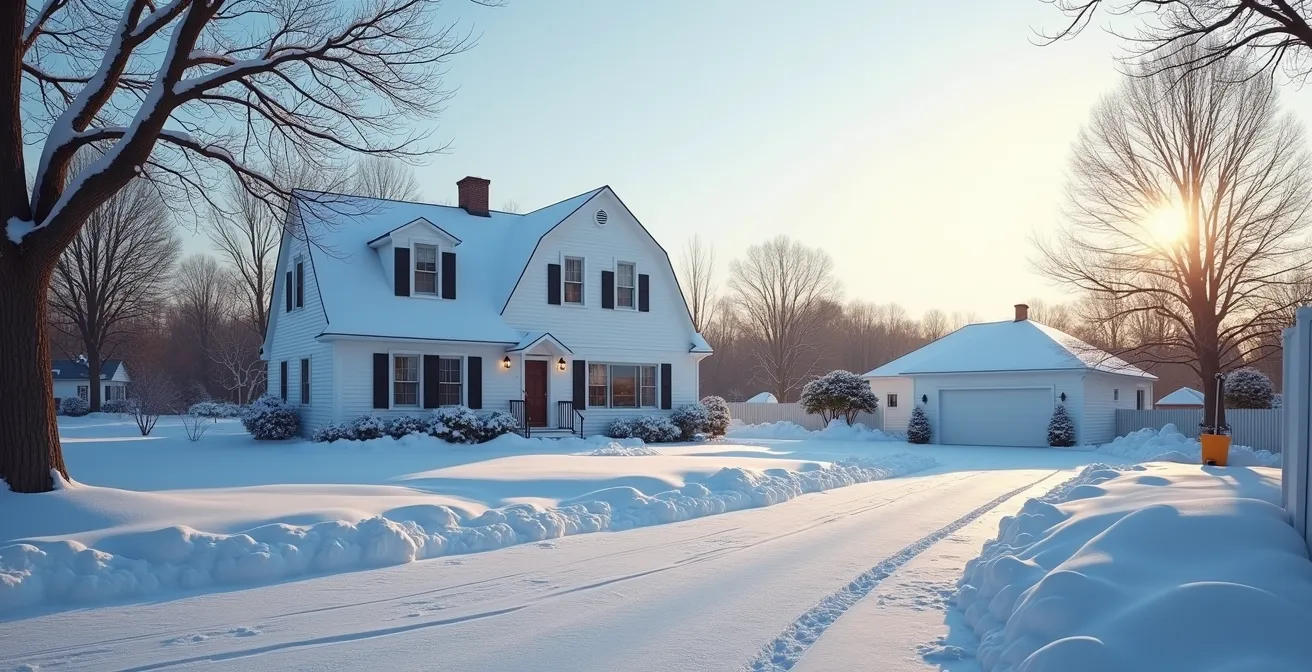
The fantasy of owning a detached home in Quebec—the sprawling yard, the privacy—often ignores the demanding reality. This isn’t just about paying a mortgage; it’s about taking on a second, unpaid job. The true cost of that “freedom” is measured in weekends lost to repairs, the constant battle against a harsh climate, and navigating a maze of regulations. This guide reveals the invisible labour that brokers don’t mention.
The dream is potent. You picture it clearly: a sprawling backyard for summer barbecues, no noisy neighbours through the walls, and the quiet satisfaction of owning a piece of Quebec all to yourself. After years in a condo, the allure of a detached house feels like the ultimate upgrade. The freedom of space, the privacy, the canvas for your life. It’s a beautiful picture, but it’s incomplete.
Most advice focuses on the financial transaction—getting the mortgage, the down payment, the closing costs. But the real commitment begins the day you get the keys. What’s often left unsaid is the sheer volume of invisible labour that comes with that property deed. It’s the constant, cyclical grind of maintenance, the physical toll, and the mental load of being your own superintendent, project manager, and groundskeeper, all while battling the formidable Quebec climate.
But what if the key to happy homeownership wasn’t just having a bigger budget, but truly understanding the job description before you apply? This guide pulls back the curtain on the romanticized vision. We’ll move beyond the fantasy to detail the year-round responsibilities, from the relentless seasonal onslaught of snow and ice to the hidden complexities of septic systems and the regulatory maze of renovations. This is the conversation you have with a seasoned homeowner over the fence, the unvarnished truth about what it really takes to keep that dream alive.
This article breaks down the essential, often-overlooked realities of detached homeownership in Quebec. From the non-negotiable winter contracts to the secrets of surviving renovation projects, the following sections provide a clear-eyed look at the challenges and how to manage them.
Summary: Detached Homes in Quebec: The Freedom of Space vs. The Burden of Maintenance
- Why Snow Removal Contracts Are Essential for Detached Homeowners?
- Fences and Hedges: What Are the Rules for delimiting Your Property Line?
- Asphalt Shingles vs. Metal Roof: Which One Survives Quebec Winters Best?
- Septic Tanks and Wells: The Hidden Costs of Country-Style Detached Living
- How Building a Garage Can Offer the Highest ROI for Detached Homes?
- The 20% Rule: Why You Always Need a Contingency Fund for Old House Renos
- Hardiness Zone 5b: Which Plants Actually Survive a Montreal Winter?
- Renovation Management: How to act as Your Own General Contractor in Quebec?
Why Snow Removal Contracts Are Essential for Detached Homeowners?
In a condo, a blizzard means watching the snow fall from a warm window. For a detached homeowner in Quebec, it’s the starting pistol for a race against time. The romantic image of peacefully clearing your driveway vanishes after the third major storm in a month, when you’re wrestling a groaning snowblower at 6 a.m. just to get to work. This is the first and most brutal reality of the seasonal onslaught: snow isn’t a magical dusting; it’s a logistical problem that can trap you in your own home.
Relying on your own back or an aging machine is a gamble. A private snow removal contract isn’t a luxury; it’s an essential utility, as important as hydro. It’s your guarantee that you won’t be blocked in, that delivery drivers can access your property, and that you won’t throw your back out before a Monday morning meeting. The scale of this operation is immense; Montreal’s public removal alone is a massive undertaking, highlighting the sheer volume of snow that needs to be managed.
Case Study: Montreal’s Complex Snow Removal Operations
Montreal runs one of the biggest snow-clearing operations in the world. The city’s dense downtown streets and high snowfall force complex operations including towing cars, plowing snow into streets before loading it onto trucks, and driving it to over 20 dumps. This process is so intensive it costs about a million dollars per centimetre of snow removed, a scale that illustrates why individual homeowners often outsource this Herculean task.
However, not all contracts are created equal. A vague agreement can leave you with a two-foot wall of icy plow-leavings blocking your driveway for hours. A professional contract is your shield, defining trigger points, clearing deadlines, and services included. Choosing the right company requires due diligence to ensure they are reliable, insured, and transparent.
Action Plan: Your Essential Snow Removal Contract Checklist
- Verify the company is listed in the Quebec Business Registry and carries liability insurance for any potential damage to your property.
- Compare quotes from multiple providers, specifically noting the deadline for clearing after a snowfall and the minimum snowfall amount that triggers a visit.
- Check for clear contract terms, including the start and end dates of the service, and any “snow cap” provisions that limit the number of clearings.
- Ensure that salt or abrasive application for ice, as well as clearing paths for oil or propane deliveries, are included or available as options.
- Document any damage to your driveway, lawn, or home immediately with photos and verify the contractor’s process for handling liability claims.
Fences and Hedges: What Are the Rules for delimiting Your Property Line?
That dream of a yard comes with borders, and those borders can quickly become battlegrounds. In a condo, your boundaries are concrete walls. In a detached home, they are invisible lines on a survey plan, and marking them with a fence or hedge plunges you into a regulatory maze of municipal bylaws and neighbourly negotiations. You can’t just build whatever you want, wherever you want. Every municipality in Quebec has its own specific rules governing the height, materials, and placement of fences.
Forgetting to check these rules can lead to costly orders to tear down your brand-new fence. Is chain-link allowed in the front yard? How high can a privacy fence be in the back? Do you need a permit? The answers vary dramatically from a dense urban borough like Outremont to a suburb like Brossard. This is a prime example of the invisible labour of homeownership: hours spent deciphering municipal websites and paperwork before a single post hole is dug. It’s your responsibility to know the law, and ignorance is no defence when a bylaw officer comes knocking.
This table illustrates how different municipalities across Quebec approach fence regulations, highlighting the critical need to verify local rules before planning any project.
| Location Type | Max Height | Material Restrictions | Permit Required |
|---|---|---|---|
| Dense Urban (Outremont) | 1.2m front, 2m sides | No chain link in front | Yes |
| Suburban (Brossard) | 1.5m front, 2.4m sides | Various materials allowed | Sometimes |
| Rural Municipality | 2m standard | Agricultural fencing permitted | Rarely |
Beyond the official rules, there’s the human element. A shared property line requires cooperation. A fence built an inch onto your neighbour’s property can spark a decade-long feud. The best approach is always to have a recent certificate of location in hand and to discuss your plans with your neighbours before you start. A simple conversation can prevent a world of conflict and legal headaches down the road, preserving the peace and quiet you moved to the suburbs for in the first place.
Asphalt Shingles vs. Metal Roof: Which One Survives Quebec Winters Best?
Your roof is your home’s first line of defence against the Quebec winter, and it takes a relentless beating. Between the sheer weight of snow and the destructive cycle of freezing and thawing, a weak roof is a catastrophe waiting to happen. The choice of roofing material isn’t just an aesthetic one; it’s a critical long-term investment in your home’s structural integrity. The two main contenders, asphalt shingles and metal, perform very differently under the pressure of our climate.
Asphalt shingles are the common, budget-friendly choice. However, their granular surface can grip snow, contributing to the formation of ice dams. These thick ridges of ice at the edge of the roof prevent meltwater from draining properly. The water backs up under the shingles, seeping into your attic and causing rot, mould, and ruined insulation. For older homes, this is a major concern, as studies show that homes over 20 years old often need major system replacements, with the roof being a primary candidate.

As the image highlights, metal roofing offers a distinct advantage. Its smooth, low-friction surface is designed to shed snow and ice efficiently. The snow slides off before it can accumulate and form a dam, drastically reducing the risk of water infiltration. While the upfront cost is significantly higher, a metal roof can last 50 years or more, compared to the 15-25 year lifespan of asphalt shingles. It’s a classic “pay now or pay more later” scenario—a calculation every Quebec homeowner must make.
Ultimately, the decision comes down to your budget and time horizon. Are you looking for a short-term, affordable solution, or are you making a long-term investment to fortify your home against the worst of the winter for decades to come? The answer will define your maintenance burden for years.
Septic Tanks and Wells: The Hidden Costs of Country-Style Detached Living
If you’re dreaming of a home outside the city, you’re likely also dreaming of escaping municipal water and sewer bills. But that “off-grid” freedom comes with a trade-off: you become the sole operator of your own personal water and waste treatment plant. A septic tank and a well are not “set it and forget it” systems. They are complex, sensitive ecosystems that require regular, mandated maintenance—a piece of invisible labour that can have catastrophic financial consequences if ignored.
In Quebec, the law is clear. Under regulation Q-2, r.22, septic tanks for main residences must be emptied every two years by a licensed professional. This isn’t a suggestion; it’s a legal requirement. Forgetting can lead not only to fines but to a system failure that can contaminate your property and cost tens of thousands of dollars to replace. Likewise, your well water isn’t guaranteed to be pure. It’s your responsibility to test it annually for contaminants like arsenic or manganese to ensure it’s safe for your family to drink.
The costs associated with these systems are significant. If a major component fails, you’re not just paying for a simple repair; you could be looking at a full system replacement, which can easily run into the tens of thousands. These are the kinds of expenses that can derail a family’s finances if they haven’t adopted a serious contingency mindset. Living with these systems requires diligence, record-keeping, and a healthy respect for the biology and mechanics at play beneath your lawn.
Action Plan: Essential Septic System and Well Maintenance Schedule for Quebec
- Every 2 years: Schedule the mandatory septic tank emptying for your main residence, as required by Quebec’s Q-2, r.22 regulation, and keep the receipt as proof.
- Annually: Have your well water tested by an accredited Quebec laboratory for common contaminants like iron ochre, arsenic, and manganese.
- Monthly: If you have an advanced system like an Ecoflo or Bionest, perform the recommended monthly checks on its components as per the manufacturer’s guide.
- Seasonally: Inspect and perform routine maintenance on any water filtration or softening systems connected to your well.
- As needed: Document all maintenance, tests, and repairs in a dedicated logbook. This is crucial for compliance and will be invaluable for resale.
How Building a Garage Can Offer the Highest ROI for Detached Homes?
For a condo dweller, a garage is just a parking spot. For a detached homeowner in Quebec, a garage is a strategic command center, a workshop, and a crucial “airlock” against the winter. Its return on investment isn’t just measured in property value; it’s measured in reclaimed time, reduced stress, and the sheer practicality of surviving the seasonal onslaught. A well-designed garage is arguably one of the most functional additions you can make to a Quebec home.
Think beyond just a place to park the car. A garage means no more scraping ice off your windshield in a -20°C wind. It’s a dedicated space for the snowblower, shovels, and bags of salt, keeping your front entrance clear and uncluttered. It’s a workshop for those inevitable DIY repairs, a storage area for seasonal equipment, and a place to take off snowy boots and coats before they track slush through the house. It transforms the daily battle with winter into a manageable routine.
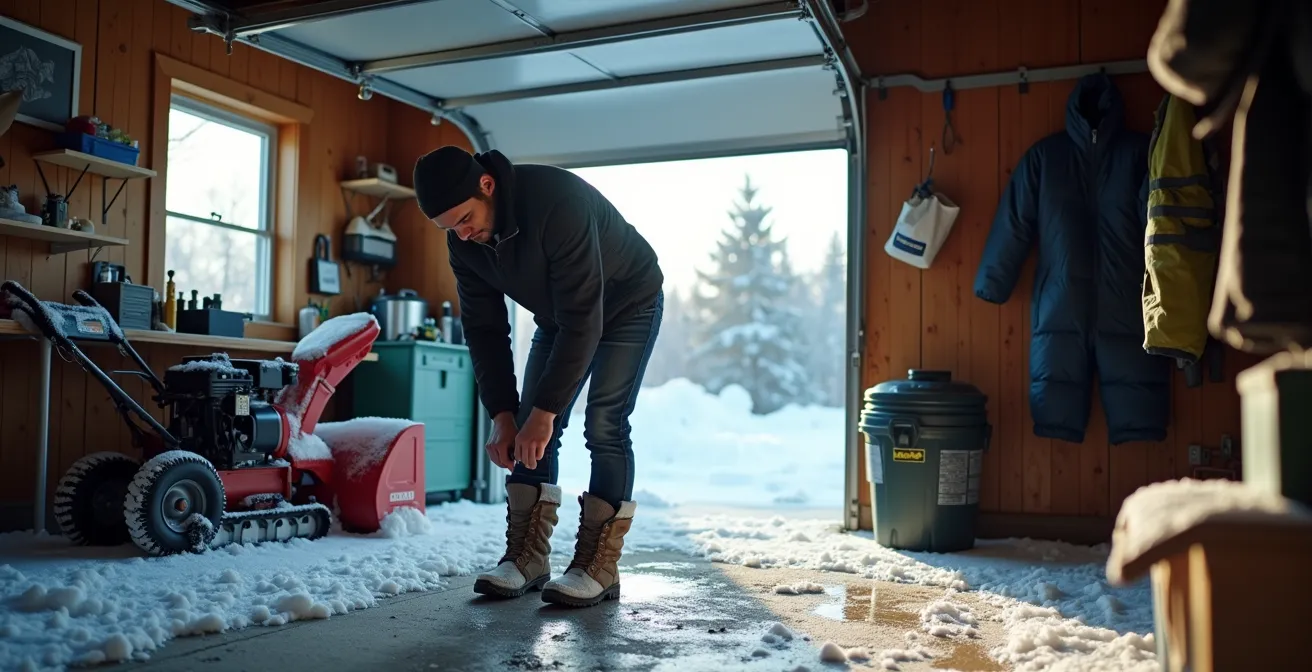
However, building one isn’t a simple weekend project. As with fences, you’re stepping into the regulatory maze. Before you even think about pouring a foundation, you need to check with your municipality about permits, setback requirements, and building codes. As the Régie du bâtiment du Québec (RBQ) points out, these standards can differ significantly from one town to the next. You’ll also need to notify your insurer. While you might be able to do some of the work yourself, any electrical installation must be done by a licensed contractor, a non-negotiable safety and legal requirement.
Building a garage is a significant project, but its contribution to daily life in Quebec makes it a powerful investment. It’s a tangible piece of infrastructure that directly combats the biggest pain points of detached homeownership in our climate, making life more organized, efficient, and comfortable.
The 20% Rule: Why You Always Need a Contingency Fund for Old House Renos
The “20% rule” is a common piece of advice for any renovation: budget an extra 20% for unexpected problems. In Quebec, especially with older homes, this isn’t a cautious suggestion—it’s the bare minimum for survival. Adopting a true contingency mindset means accepting that your house is full of secrets, and they will almost always reveal themselves at the most expensive and inconvenient times. Tearing down a wall might expose rotten studs, outdated wiring, or a plumbing nightmare.
These surprises are where the dream of a quick, affordable reno dies. A simple bathroom update can balloon into a full-gut job, turning a $10,000 project into a $25,000 ordeal. This is the financial manifestation of the invisible labour of owning an older home. The constant threat of a major, unbudgeted expense is a source of significant stress. The contingency fund isn’t “if” money; it’s “when” money. It’s the difference between navigating a surprise with a plan and having your financial stability crumble.
Fortunately, the government recognizes the burden of maintaining and upgrading Quebec’s housing stock. Various provincial and municipal programs offer grants and subsidies that can help offset the costs of major work, particularly for energy efficiency upgrades. Understanding these programs is a critical part of your job as a homeowner-manager.
The following table provides an overview of some key renovation grant programs available to Quebec homeowners, which can be a lifeline when facing major repair costs. As per a comparative analysis of available grants, eligibility and aid amounts vary widely.
| Program | Maximum Aid | Eligibility | Type of Work |
|---|---|---|---|
| Hydro-Québec LogisVert | $1,275 (oil) / $850 (propane) | Residential customers | Heat pump installation |
| Novoclimat | $4,000 (first-time buyers) | New home owners | Energy efficiency |
| Rénoclimat | Up to $10,000 | Existing homes | Energy upgrades |
| Rural Program | $20,000 (95% coverage) | Low-income rural | Major defect repairs |
This financial safety net is crucial because the costs of homeownership are always rising. In Montreal, for instance, some boroughs have faced a staggering 100% year-over-year cost increase for services like snow removal, which puts pressure on municipal budgets and, ultimately, your property tax bill. A contingency fund isn’t just for renovations; it’s for the ever-increasing cost of simply staying put.
Hardiness Zone 5b: Which Plants Actually Survive a Montreal Winter?
Finally, a fun part of owning a home: the garden! You imagine lush flower beds and fresh vegetables. But even here, in the realm of beauty and growth, the Quebec climate has the final say. Your garden is another front in the battle against the seasonal onslaught. Planting the wrong species is not just a waste of money; it’s a recipe for heartbreak when your beautiful perennials don’t return in the spring. Understanding your agricultural hardiness zone is non-negotiable.
Much of the Montreal area falls into Zone 5b. This designation dictates what can survive our cold winters and specific growing season. Importing delicate plants you saw on a southern vacation is a fool’s errand. The key to a thriving, low-maintenance garden is to embrace native Quebec plants. Species like Black-eyed Susans (Rudbeckia hirta) and Wild Bergamot (Monarda fistulosa) are not only beautiful but are genetically programmed to thrive in our soil and weather. They also provide crucial support for local pollinators like bees and butterflies.
This approach is a form of sweat equity that pays dividends. By choosing plants adapted to the local environment, you spend less time watering, fertilizing, and protecting them. In suburban and rural areas, this also means choosing deer-resistant shrubs, unless you want your garden to become an all-you-can-eat buffet. For those interested in edibles, hardy local options like serviceberries (amélanchier) and Haskap berries (camerise) offer a rewarding harvest without the fuss of more fragile fruit trees.
Gardening in Quebec is an exercise in strategic surrender. You work *with* the climate, not against it. By selecting the right native plants, you create a resilient, beautiful landscape that supports the local ecosystem and minimizes your workload—a rare win-win for the busy homeowner.
Action Plan: Your Guide to Planting for Quebec’s Zone 5b
- In spring, plant native perennials like Rudbeckia hirta (Black-eyed Susan) and Monarda fistulosa (Wild Bergamot) that are adapted to the climate and support local pollinators.
- During summer, if you live in an area with significant wildlife, install deer-resistant native shrubs to protect your garden beds.
- In the fall, plant hardy fruit-bearing options that thrive in Quebec, including serviceberries (amélanchier) and Haskap berries (camerise).
- For winter, established native plants require minimal protection as they are already adapted to cold temperatures and snow cover.
- Year-round, focus on selecting plants that are suited to Quebec’s specific soil types (clay, sand) and natural precipitation patterns for a truly low-maintenance garden.
Key Takeaways
- The “freedom” of a detached home comes with the non-negotiable job of constant maintenance, or “invisible labour.”
- Quebec’s harsh climate (the “seasonal onslaught”) dictates everything from your roof choice to your landscaping, and ignoring it is financially perilous.
- Navigating municipal bylaws and provincial regulations (the “regulatory maze”) is a core responsibility of homeownership, especially for projects like fences and garages.
Renovation Management: How to act as Your Own General Contractor in Quebec?
At some point, you will need to hire a professional. Whether it’s for a new roof, a plumbing emergency, or that dream kitchen renovation, you will step into the role of a general contractor. This is perhaps the most high-stakes job of a homeowner. Your task is to protect your investment and your family by hiring competent, licensed, and insured professionals. In Quebec, this process is governed by a strict legal framework managed by the Régie du bâtiment du Québec (RBQ).
The single most important rule is this: never, ever hire an unlicensed contractor for work that requires a license. The temptation of a cheaper, “cash” deal can be strong, but the risks are astronomical. An unlicensed contractor has no accountability. If they do shoddy work, damage your home, or get injured on your property, you have little to no recourse. You could be on the hook for damages, repairs, and even medical bills. This is why the RBQ’s role is so vital; it provides a layer of protection for consumers.
In Quebec, all natural and legal persons that do home renovation work for you are required to hold a Régie du bâtiment du Québec (RBQ) licence.
– Régie du bâtiment du Québec, Choosing a Contractor Guidelines
A licensed contractor must hold a bond that protects you against fraud or negligence. They are required to have liability insurance. Verifying a contractor’s RBQ license is not just a good idea; it’s an essential act of due diligence. This is your final exam in the school of homeownership, and the stakes are high. Taking a few minutes to check a license number can save you from years of financial and legal nightmares.
Action Plan: Your Step-by-Step RBQ License Verification Process
- Ask any potential contractor for their RBQ licence number before you even consider signing a contract or accepting a quote.
- Go to the RBQ’s official website and enter the licence number into the online “Licence holders’ repertory” to confirm it is valid and active.
- Verify that the contractor holds the specific subclasses of licence required for your type of work (e.g., roofing, electrical, plumbing).
- Check the website of the Office de la protection du consommateur (Consumer Protection Office) to see if any complaints have been filed against the contractor.
- Ensure that all quotes clearly list the contractor’s GST and QST numbers and provide a detailed description of the work to be performed.
- Confirm that the contractor has liability insurance and that their employees hold the required CCQ (Commission de la construction du Québec) competency cards.
Owning a detached home in Quebec is a deeply rewarding experience, but it’s a partnership, not a prize. It demands respect, diligence, and a constant input of that invisible labour. It’s a job. Now that you’ve read the full job description, from the relentless winters to the regulatory hurdles, you can make your decision with eyes wide open. If you’re ready to embrace the role of caretaker, manager, and planner, the dream is absolutely within your reach. For those prepared for the reality, the next logical step is to start planning for these costs and responsibilities.