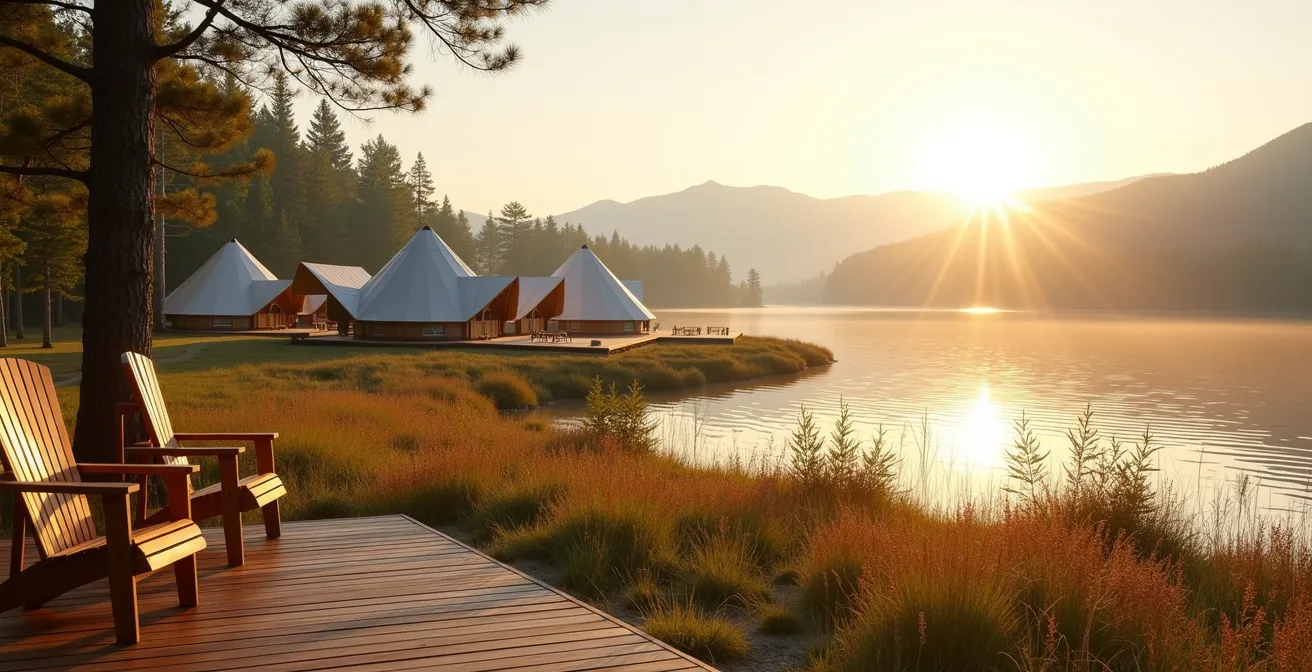
Success in Quebec’s tourism market no longer comes from building standard hotels, but from deploying asset-light, experience-heavy accommodation models that command premium prices.
- High-ROI niches like glamping, agrotourism, and wellness retreats leverage unique experiences to attract a dedicated clientele willing to pay more for less infrastructure.
- Focusing on the predictable and resilient “Quebecor” traveler, especially during peak times like the construction holiday, provides a more stable revenue base than relying on volatile international tourism.
Recommendation: Prioritize obtaining an official CITQ classification for your chosen niche; it is the legal key to unlocking premium pricing and building a legitimate, high-value tourism business in Quebec.
For any entrepreneur eyeing Quebec’s vibrant tourism sector, the default path often seems to be building a hotel. Yet, this path is fraught with immense capital costs, fierce competition, and the challenge of differentiation. The modern traveler, especially in a market as distinct as Quebec, is no longer seeking a generic room; they are chasing memories, authenticity, and a connection to place. The common advice is to simply “offer experiences,” but this vague platitude misses the core of the opportunity.
The true competitive advantage lies not in adding a few local touches to a conventional hotel but in fundamentally rethinking the business model. The shift is towards an “asset-light, experience-heavy” strategy. This means investing less in concrete and more in curated, immersive environments that generate a significantly higher return on investment. These models—from luxury glamping tents and farm stays to minimalist eco-pods—are not just trends; they are strategic responses to a deep-seated demand for unique, high-quality escapes.
But navigating this landscape requires more than just a good idea. Success is contingent on understanding Quebec’s specific market dynamics, from its unique regulatory environment governed by the CITQ to the cultural nuances of the “Quebecor” traveler. This guide will deconstruct the most profitable experiential niches, providing a strategic blueprint for entrepreneurs who want to build a resilient and highly sought-after hospitality business that stands apart from the cookie-cutter hotel industry.
To provide a clear roadmap for this new investment paradigm, this analysis breaks down the essential components for success. From identifying high-ROI niches to navigating Quebec-specific regulations, each section is designed to build a comprehensive strategy for launching a profitable, experience-based accommodation business.
Summary: Hospitality in Quebec: Why Experience-Based Stays Are Outperforming Standard Hotels?
- Glamping vs. Camping: Why Travelers Pay 4x More for a Canvas Tent?
- Agrotourism: How to Monetize Your Farm with Overnight Guest Stays?
- Spas and Retreats: What Facilities Are Essential for the Wellness Traveler?
- Ski, Bike, Hike: Location Strategy for Adventure-Focused Accommodations
- Workation Ready: How to Equip Your Rental for the “Zoom from the Woods” Crowd?
- How to Obtain Your CITQ Classification Number Step-by-Step?
- The “Quebecor” Traveler: Why Focusing on Local Tourists is Safer Than Internationals?
- Eco-Pods and Tiny Cabins: High ROI on a Minimal Footprint?
Glamping vs. Camping: Why Travelers Pay 4x More for a Canvas Tent?
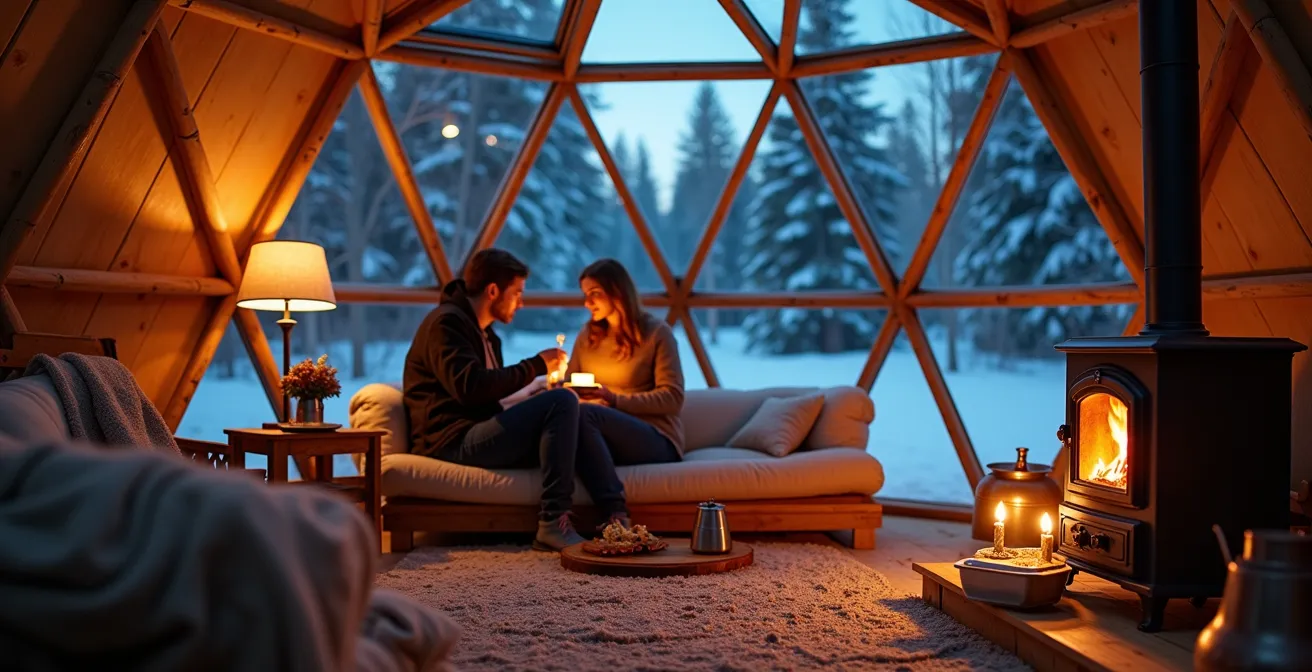
The glamping phenomenon is the quintessential example of the “experience premium.” Travelers are not just paying for a place to sleep; they are paying to immerse themselves in nature without sacrificing comfort, cleanliness, and amenities. While a standard campsite might charge $50 per night, a well-appointed glamping dome or tent can easily command $200 or more. The difference isn’t the location; it’s the curated experience of luxury and convenience within a rustic setting. This premium is justified by providing features that traditional camping lacks: a comfortable bed, private bathroom facilities, heating or a wood stove, and thoughtfully designed interiors.
The key is to bundle the accommodation with a suite of premium services that elevate the stay from a simple overnight to a full-fledged resort experience. This strategic bundling is what creates a high barrier to entry for competitors and justifies the significant price differential.
Case Study: Bel Air Resort Mont-Tremblant’s Premium Glamping Model
Bel Air Tremblant exemplifies this strategy. Located on 543 acres, the resort offers luxurious domes and pods certified by the CITQ. The value proposition is massively enhanced by a 9,000 sq ft clubhouse featuring a spa, bistro, fitness center, and pool. This comprehensive approach demonstrates how bundling high-end experiences with premium facilities justifies top-tier pricing, transforming a “stay in the woods” into a luxury getaway and capturing a clientele far beyond the traditional camping market.
This model proves that the investment is not in the canvas itself, but in the ecosystem of comfort and exclusive amenities built around it. It’s an “asset-light” approach compared to a hotel, but “experience-heavy” in its delivery.
Agrotourism: How to Monetize Your Farm with Overnight Guest Stays?
For farm owners in Quebec, agrotourism offers a powerful way to diversify revenue streams by monetizing existing assets: land, expertise, and authentic rural life. The modern traveler, disconnected from food sources, is increasingly willing to pay for the experience of connecting with agriculture. This isn’t just about offering a room; it’s about providing an educational and interactive stay. Offering guests the chance to participate in farm activities—from picking their own fruit to learning about animal husbandry—creates a unique selling proposition that no hotel can replicate.
Quebec’s rich agricultural landscape provides a fertile ground for this niche. For example, Quebec tourism data shows the province is a world leader in specific organic products, creating unique branding opportunities. By transforming a portion of a farm into a legitimate, CITQ-classified accommodation, operators can tap into a demand for authenticity while generating a new, high-margin income source. The key is to structure these experiences, offering packages that align with the seasons, such as maple syrup tours in the spring or apple picking in the fall.
Your Action Plan: Turning Your Farm into a Destination
- Seek Official Recognition: Apply for MAPAQ (Ministry of Agriculture, Fisheries and Food of Quebec) grants and join the Terroir et Saveurs du Québec Network for certification, which builds credibility and provides marketing support.
- Develop U-Pick Programs: Create seasonal pick-your-own programs for strawberries, the 18 varieties of apples available in Quebec, or other specialty crops to attract families and foodies.
- Ensure Legitimacy and Safety: Design overnight stays that qualify for CITQ classification for insurance and legal compliance. Partner with the Union des producteurs agricoles (UPA) for liability insurance covering guest interactions with animals and machinery.
- Craft Farm-to-Table Experiences: Offer dining that features Protected Geographical Indication (PGI) products like Charlevoix lamb or Neuville sweet corn, creating an exclusive culinary draw.
- Build Seasonal Packages: Market specific experiences tied to Quebec’s calendar, such as spring sugar shack visits, summer berry festivals, fall harvest weekends, and winter sleigh rides.
Ultimately, successful agrotourism is about selling an educational and restorative experience. It’s a direct response to the urban desire for connection, authenticity, and understanding where food comes from, making it a highly resilient and rewarding business venture.
Spas and Retreats: What Facilities Are Essential for the Wellness Traveler?
The wellness traveler is a high-value demographic seeking more than just relaxation; they are looking for transformative experiences that promote health and well-being. For an entrepreneur in Quebec, catering to this market requires a strategic investment in specific facilities that create a holistic wellness journey. The quintessential offering is the Nordic spa circuit, a cycle of hot (sauna, hot tub), cold (cold plunge, snow), and rest periods. This is no longer a luxury but a baseline expectation for any serious wellness destination in the province.
However, differentiation comes from the details and the authenticity of the experience. Instead of a standard electric sauna, a wood-fired Finnish sauna offers a more rustic and appealing sensory experience. Sourcing local products, like boreal essential oils for aromatherapy or herbal teas from nearby farms, reinforces a connection to Quebec’s natural environment and supports the “terroir” narrative that resonates deeply with this clientele.

Case Study: The Heritage-Based Wellness of Le Monastère des Augustines
Le Monastère des Augustines in Old Quebec (CITQ #272823) is a masterclass in wellness branding. By converting a historic 1639 monastery into a not-for-profit wellness hotel, it offers a unique experience rooted in the Augustinian Sisters’ heritage of care and healing. The experience is not just about the spa facilities but about the holistic atmosphere of contemplation, history, and health. This shows that the most powerful wellness offerings are those with a unique story and a deep sense of place.
The following table breaks down the investment required to move from a basic setup to a premium offering that truly captures the wellness traveler’s imagination and wallet.
| Facility Type | Basic Setup | Premium Nordic Circuit | Investment Range (CAD) |
|---|---|---|---|
| Hot Water Feature | Standard hot tub | Wood-fired cedar hot tub + cold plunge | $8,000 – $35,000 |
| Heat Treatment | Infrared sauna cabin | Traditional Finnish sauna + steam room | $15,000 – $60,000 |
| Relaxation Space | Indoor lounge | Heated solarium with forest views | $10,000 – $40,000 |
| Local Wellness Products | Basic amenities | Boreal essential oils, herbal teas from local farms | $2,000 – $8,000/year |
Investing in these premium facilities creates a destination that can command higher nightly rates and attract guests year-round, making it a resilient and profitable venture.
Ski, Bike, Hike: Location Strategy for Adventure-Focused Accommodations
For accommodations targeting the adventure traveler, location is not just a feature; it is the entire product. The most successful properties are not simply “near” attractions but are seamlessly integrated with them. This gives rise to the “Trailhead Premium,” a quantifiable increase in nightly rates for properties offering direct, walk-out access to major trail networks. This premium exists because it eliminates the biggest friction point for enthusiasts: the need to pack gear, drive, and find parking. Convenience is a luxury for which this market will gladly pay.
Quebec’s vast network of parks and trails presents a massive opportunity. Properties with direct access to renowned networks like Le P’tit Train du Nord, the Sentiers de l’Estrie, or the ski slopes of major resorts can see 30-50% higher nightly rates than comparable rentals just a few kilometers away. The strategy for an investor is clear: acquiring or developing property with deeded access or adjacent to these trailheads is a direct investment in higher, more defensible pricing power. The market for this is substantial; Statistics Canada reports 61.5 million visits to Quebec’s tourism regions in 2024, generating billions in revenue and highlighting a massive pool of potential guests.
The ideal location offers four-season appeal. A property with ski-in/ski-out access in winter should also offer bike-in/bike-out access to mountain biking trails in the summer and direct entry to hiking paths for the fall. This multi-seasonality is crucial for maximizing occupancy rates and building a year-round business. The investment is less about the size or luxury of the building and more about its strategic placement as a gateway to adventure. This makes it a perfect fit for the “asset-light” model, where smaller cabins or pods can be highly profitable if their location is superior.
Workation Ready: How to Equip Your Rental for the “Zoom from the Woods” Crowd?
The rise of remote work has created a new, lucrative traveler profile: the “workationer.” This individual or family seeks to escape the city for an extended period (often mid-week) while remaining fully productive. For a property owner in rural Quebec, this is a golden opportunity to fill what were once low-demand periods. However, attracting this clientele requires more than just a nice view. It demands a specific set of amenities where there can be no compromise, chief among them being high-speed, reliable internet. In many rural areas, this means investing in satellite solutions like Starlink.
Beyond connectivity, the successful workation rental must feature a dedicated, professional workspace. A flimsy desk in a corner is not enough. The standard is now an ergonomic chair, an adjustable or large desk, and an external monitor. Small, thoughtful additions like a ring light for video calls and a premium coffee setup (an espresso machine or high-end drip system) signal a true understanding of the remote worker’s needs. To attract longer, more profitable stays, operators should implement dynamic pricing that offers significant discounts of 30-40% for Monday-Thursday bookings.
Finally, a critical and often overlooked requirement in Quebec is a backup power solution. With the province’s susceptibility to ice storms and power outages, a generator or battery system like a Tesla Powerwall is not a luxury but a necessity to guarantee the uninterrupted connectivity that workationers depend on. The choice of internet provider is the single most important decision, as shown below.
| Provider | Speed | Monthly Cost | Setup Cost | Reliability |
|---|---|---|---|---|
| Starlink | 100-200 Mbps | $140 | $599 | 95% uptime |
| Xplornet LTE | 25-50 Mbps | $100 | $199 | 85% uptime |
| Bell Wireless Hub | 25-50 Mbps | $85 | $0 | 80% uptime |
| Traditional DSL | 5-10 Mbps | $60 | $0 | 90% uptime |
By investing in this specific infrastructure, a rural property transforms from a simple weekend getaway into a high-demand productivity hub, capable of generating consistent revenue throughout the week and year.
How to Obtain Your CITQ Classification Number Step-by-Step?
In Quebec’s tourism industry, the CITQ (Corporation de l’industrie touristique du Québec) classification number is not optional; it is the foundation of a legal and profitable accommodation business. As of 2024, it is illegal to list a short-term rental on any platform without a valid CITQ number. Far from being just a bureaucratic hurdle, this registration is a powerful tool. It provides credibility, allows for proper insurance coverage, and is the key to unlocking premium pricing. A 3-star or 4-star CITQ rating is a trusted signal of quality that allows you to justify rates 15-25% higher than unclassified, black-market listings.
The process requires careful preparation and adherence to a strict set of standards evaluated by a CITQ inspector. These standards cover everything from cleanliness and safety to the quality of amenities provided. Furthermore, operating as a registered business means complying with all provincial laws, including Quebec’s Bill 96 language requirements for all communications and Bill 25 privacy laws for handling guest data. The official backing of the government reinforces the system’s importance, as the Government of Quebec notes in its official tourism dataset that all legitimate establishments must have a certificate in force. Successfully navigating this process is the first and most critical step to building a sustainable business.
Your Checklist for CITQ Registration and Compliance
- Submit the Application: Begin by submitting your initial application on the CITQ online portal, including detailed property information, photos, and your Quebec business registration number (NEQ).
- Ensure Language Compliance: Verify that all guest communications, online listings, physical signage, and documents adhere to the French language requirements mandated by Quebec’s Bill 96.
- Prepare for Inspection: Thoroughly clean and prepare your property for the CITQ inspector’s visit. They will evaluate the property against a detailed checklist to assign your star rating (from 0 to 5).
- Display Your Number: Once issued, your CITQ classification number must be prominently displayed on all advertisements and booking platform listings, including Airbnb, Vrbo, and your own website.
- Implement Data Privacy Protocols: Establish procedures for collecting, storing, and using guest data that are fully compliant with Quebec’s Bill 25, ensuring you obtain explicit consent for any data use.
Viewing the CITQ process as a strategic asset rather than a chore is a fundamental mindset shift for any serious investor in Quebec’s hospitality sector.
The ‘Quebecor’ Traveler: Why Focusing on Local Tourists is Safer Than Internationals?
While attracting international tourists can seem glamorous, building a resilient hospitality business in Quebec hinges on a much more reliable and predictable market: the Quebecor traveler. This local demographic provides a stable foundation for tourism operators, being less susceptible to global economic downturns, border closures, and currency fluctuations. Data consistently shows that domestic tourism is the bedrock of the industry. For instance, recent Airbnb data reveals that Quebec welcomed nearly 2 million domestic guest arrivals in 2024, with over half of those coming from within the province itself. This demonstrates a massive, captive audience right at your doorstep.
The behavior of the Quebecor traveler is also highly predictable, revolving around statutory holidays, school breaks, and most importantly, the annual two-week construction holiday. This late-July period sees a massive, province-wide exodus from cities to tourist regions, creating a surge in demand that is almost guaranteed year after year.
Case Study: The Construction Holiday Gold Rush
Analysis of Quebec’s major summer tourism periods provides concrete proof of this local-driven demand. During the Festival d’été de Québec, hotels recorded an average occupancy rate of 87%. Crucially, the subsequent construction holiday weeks generated an almost identical 86% average occupancy rate. This predictable annual surge allows operators to implement premium pricing with confidence, knowing that demand is virtually guaranteed. Targeting the Quebecor market during these peak times is a low-risk, high-reward strategy for maximizing annual revenue.
By aligning marketing efforts and package offerings with the vacation patterns of Quebec residents, an entrepreneur can build a business with a durable revenue stream that is insulated from the volatility of the international market. This focus on the local market is not just a safer bet; it’s a smarter one.
Key Takeaways
- The most profitable strategy in Quebec’s modern hospitality market is the “asset-light, experience-heavy” model, focusing investment on curated experiences rather than costly infrastructure.
- Success depends on selecting a high-ROI niche—such as four-season glamping, authentic agrotourism, or wellness retreats—and equipping it to premium standards.
- Targeting the predictable and resilient “Quebecor” traveler, especially around key periods like the construction holiday, provides a more stable and reliable revenue base than depending on international tourists.
Eco-Pods and Tiny Cabins: High ROI on a Minimal Footprint?
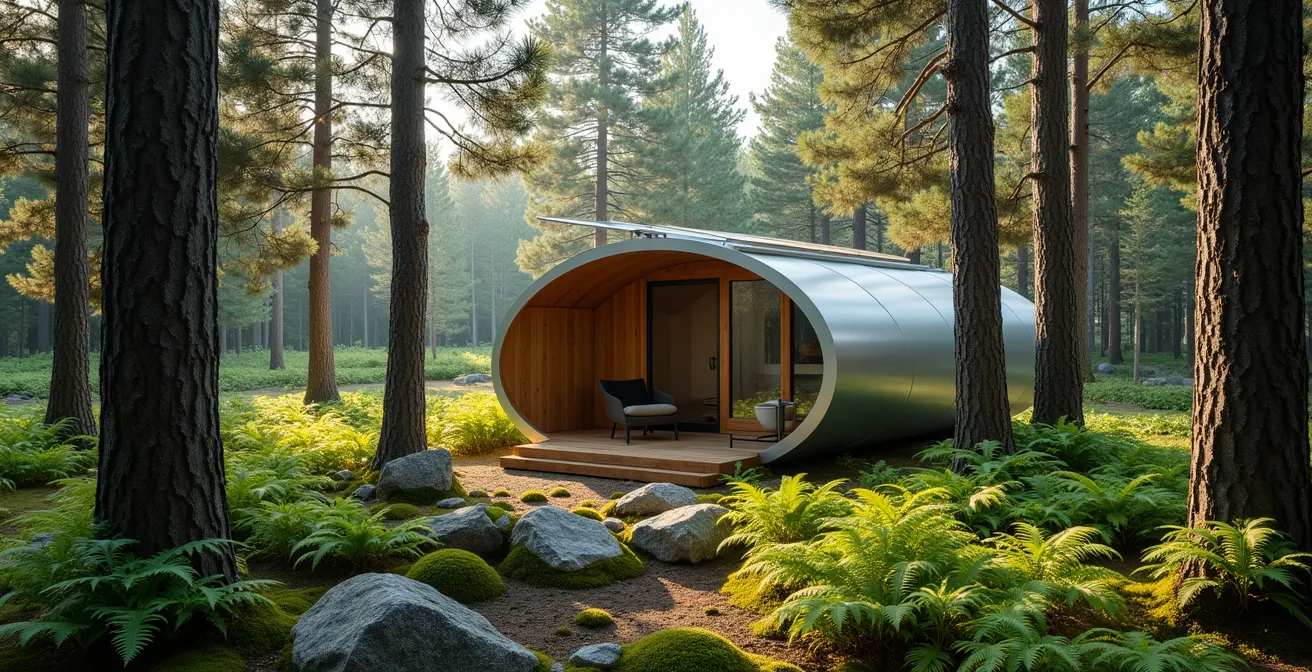
Eco-pods and tiny cabins represent the ultimate expression of the “asset-light, experience-heavy” investment thesis. These structures require significantly less capital to build than a traditional cottage or hotel wing, have a lower environmental impact, and can be placed in unique natural settings that would be unsuitable for larger construction. Their appeal lies in minimalism and a deep connection to the surrounding landscape, a proposition that strongly resonates with travelers seeking to disconnect and recharge. For the investor, this translates to a high return on investment, as these small-footprint accommodations can command nightly rates comparable to much larger, more expensive properties.
Historically, a major barrier was municipal zoning. However, a significant shift is underway in Quebec. A growing number of municipalities are now embracing tiny home development to address housing demand and promote sustainable tourism. This regulatory evolution is a game-changer for investors.
Case Study: Quebec Municipalities Opening the Door to Tiny Homes
Pioneering municipalities are actively creating legal frameworks for small-footprint dwellings. For example, Lantier has established eco-residential zones for tiny houses, Sherbrooke is developing ‘Le Petit Quartier’ for cooperative tiny homes, and Sainte-Marguerite-du-Lac-Masson has zoned lots specifically for tiny houses with lake views. Moreover, a major breakthrough occurred in June 2024, when Quebec City began allowing tiny houses as additional dwelling units (ADUs) on existing residential lots. This trend of “regulatory arbitrage” allows savvy investors to develop profitable rental units in areas previously off-limits.
Financing these projects has also become more accessible, moving beyond high-interest personal loans. The table below outlines the primary options available for investors in Quebec.
| Financing Type | Down Payment | Interest Rate | Requirements | Best For |
|---|---|---|---|---|
| CMHC Mortgage (Quebec) | 5% | <5% | Foundation, owned land, services connected | Permanent installations |
| HELOC | 0% | 3-7% | Existing home equity | ADU additions |
| Credit Union Loan | 20% | 6-8% | Business plan, local connections | Mobile units |
| Private Financing | 25-35% | 8-12% | Flexible terms | Non-conforming projects |
With falling regulatory barriers and accessible financing, eco-pods and tiny cabins offer a clear and compelling path to high-ROI hospitality investment in Quebec.