
Despite what you’ve heard, affording the creative lifestyle in Montreal’s iconic neighbourhoods isn’t about finding a miracle deal—it’s about strategically hacking the city’s unique housing system.
- Gentrification is real, pushing artists to adjacent areas like Villeray and Verdun, creating new opportunities.
- Mastering local secrets like lease transfers (“cession de bail”) and co-op applications unlocks “hidden” affordability.
Recommendation: Stop chasing yesterday’s hotspots. Instead, use the city’s structural quirks—like the plex and co-op models—to position yourself in the creative hubs of tomorrow.
There’s a certain magic to walking through the Plateau or Mile End. It’s in the vibrant murals that splash across brick walls, the hum of conversation spilling from a crowded café, and the iconic spiral staircases that define Montreal’s landscape. You’re a creative, a professional, someone who thrives on this energy. You don’t just want to visit; you want to live here. But then you see the prices. It feels like the very neighbourhoods that artists made famous are now pricing them out, and you with them.
The common advice feels hollow: “get a roommate,” “look further from the metro.” This misses the point entirely. You’re not just looking for a cheap room; you’re seeking a place within a cultural ecosystem. The fear is that by the time you can afford it, the soul of the neighbourhood will have moved on. But what if the key to unlocking this lifestyle wasn’t about saving a few dollars, but about understanding the city’s deeper patterns? What if the solution lies not in generic budget tips, but in hacking the very DNA of Montreal’s housing market?
This guide moves beyond the surface-level chatter. We’re not just going to tell you where to look; we’re going to show you how to think like a local who has seen these cycles of change before. We will explore the forces driving artists out and reveal where they are going next. We’ll decode the quirks of Victorian-era “plex” layouts, tackle practical issues like noise, and dive into powerful alternatives like housing co-ops. Ultimately, we’ll reveal the ultimate Montreal strategy for turning your rent payment into a long-term investment in the creative life you want.
This article provides a roadmap to not only find an affordable home but to truly integrate into the city’s ever-evolving artistic scene. Below is a summary of the strategies we will cover.
Summary: A Strategic Guide to Montreal’s Creative Neighbourhoods
- Why Are Artists Moving Out of the Neighborhoods They Made Famous?
- How to Find Affordable Plexes on the Edge of Trendy Districts?
- The “Double Room” Layout: How to Adapt Victorian Plans to Modern Living?
- Living Next to a Bar: How to Deal with Nightlife Noise in Lively Districts?
- How Joining a Housing Co-op Can Save You 40% on Rent?
- The “Museum District” Premium: Is It Worth Paying More to Walk to the Science Centre?
- How to Soundproof a 100-Year-Old Plex Without Losing Ceiling Height?
- The Quebec “Plex” Strategy: Why Buying a Triplex is the Best First Investment?
Why Are Artists Moving Out of the Neighborhoods They Made Famous?
The phenomenon is undeniable: the very creatives who gave Mile End its international reputation as an iconoclastic arts hub in the early 2000s are now leading an exodus. They were originally drawn by the vast, affordable studio spaces left behind after deindustrialization. This influx of artists, musicians, and indie record labels created the cultural capital that made the area desirable. Now, that same desirability has triggered a classic gentrification cycle, pushing rents and property values to levels that the creative class can no longer sustain.
This isn’t just a feeling; it’s a documented trend. The displacement of lower-income residents by wealthier ones is a significant force in Canadian cities. Data from Statistics Canada reveals that by 2016, up to 17% of Canada’s urban population lived in areas that had undergone recent gentrification. This economic pressure forces a “creative migration.” Artists and young professionals are moving, not out of the city, but into adjacent neighbourhoods, effectively becoming pioneers of the *next* cool district. Understanding this pattern is the first step to getting ahead of the curve.
So, where is the creative energy flowing? The diaspora from the Plateau and Mile End is seeding new cultural hotspots across Montreal. Keep an eye on these emerging areas:
- Villeray: Rapidly becoming the new epicentre for artists, with a growing number of studios and a vibrant community feel.
- Rosemont-La Petite-Patrie: Offers a compelling mix of relative affordability, beautiful parks like Parc Molson, and an established, lively atmosphere.
- Verdun: Once overlooked, its waterfront access and increasingly dynamic Wellington Street are attracting artists and young families alike.
- Pointe-Saint-Charles & Saint-Henri: These Sud-Ouest boroughs retain an industrial grit and have strong community resistance to gentrification, fostering a unique and resilient artistic scene.
By tracking this movement, you shift from reacting to high prices to proactively seeking out “vibe arbitrage”—finding the places where the authentic artistic soul is putting down new roots.
How to Find Affordable Plexes on the Edge of Trendy Districts?
Knowing *where* to look is only half the battle. The next step is knowing *how* to look. The most affordable and authentic apartments are rarely found on major rental websites; they are part of a hyper-local, fast-moving market. Your best weapon is the “cession de bail,” or lease transfer. This is a cornerstone of Montreal’s “structural affordability,” allowing you to take over a lease from a departing tenant at their current, often below-market, rent. This is particularly crucial in a city where moving day for the majority of leases is fixed on July 1st, creating a frenzy between March and May.
The strategy is to focus your search not within the epicentre of the Plateau, but on its periphery and in the “diaspora” neighbourhoods we’ve identified. Think about a 15-minute BIXI bike ride radius from a key metro station like Laurier or Mont-Royal. This opens up a vast territory of classic plexes that offer more space for less money, without sacrificing access to the urban core.
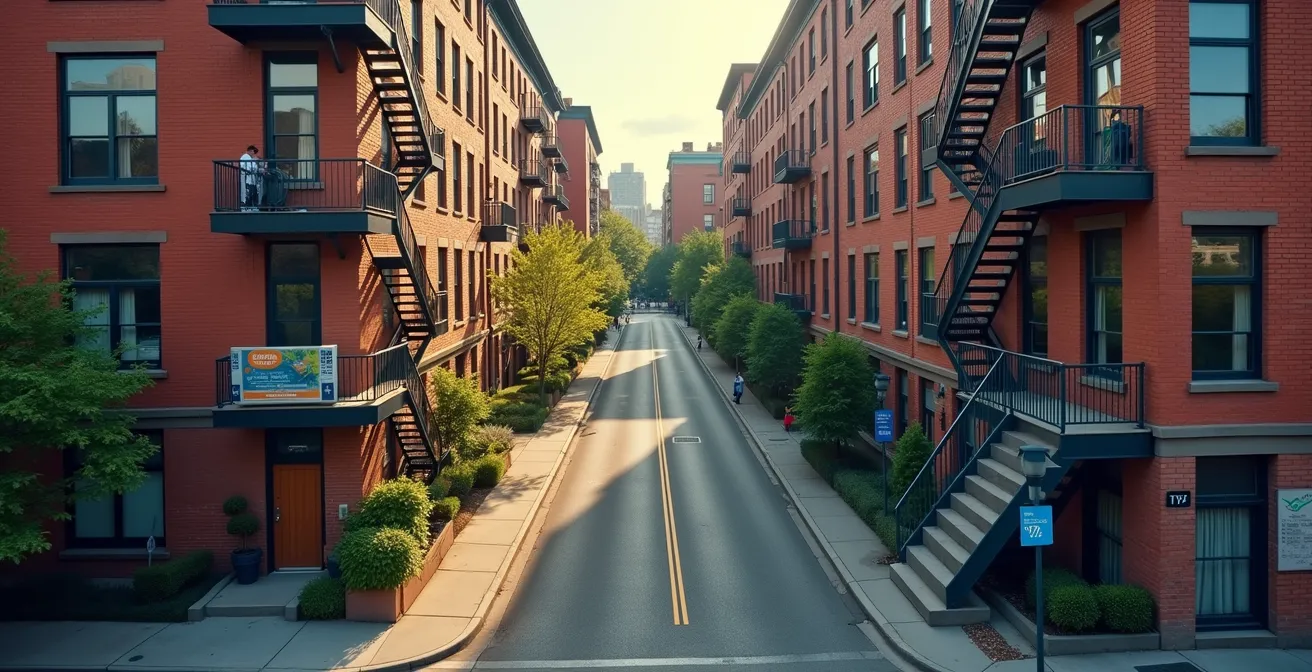
This approach requires a targeted, almost guerilla-style search effort. Forget passive scrolling; you need to be an active hunter in the specific online communities where these opportunities surface. Success depends on speed and preparation.
Your Action Plan: Scouting the Next Creative Hotspot
- Identify the epicentres: Clearly define the “too expensive” zones like the core Plateau and Mile End to establish your search perimeter.
- Map the exodus: Use local blogs (Cult MTL, MTL Blog) and social media to see which adjacent neighbourhoods, like Villeray or Verdun, are getting buzz for new gallery openings or cafes.
- Audit the “vibe infrastructure”: Before searching for listings, virtually walk the streets on Google Maps. Are there BIXI stations, independent grocery stores (fruiteries), and parks? Is the essential DNA of a walkable, creative neighbourhood present?
- Monitor for leading signals: Look for the early signs of cultural bloom—a new artist-run centre, a specialty coffee shop, or a well-attended community market. These are your indicators of a neighbourhood on the rise.
- Target your lease transfer search: Focus your Kijiji and Facebook Group searches on these specific peripheral zones, using keywords like “cession de bail Villeray” to find hidden gems before they hit the mainstream.
The “Double Room” Layout: How to Adapt Victorian Plans to Modern Living?
You’ve found it: an affordable apartment in a classic Montreal plex. You open the door and are greeted by the quintessential layout quirk: the “pièce double,” or double room. This feature, a relic of the city’s working-class architectural heritage, consists of two distinct rooms connected by a large opening, often without a hallway. While historically designed to separate a formal living room from a dining area, it presents a challenge for modern lifestyles that demand privacy for home offices or separate bedrooms.
This layout is a direct reflection of Montreal’s housing DNA. The city’s history of allowing compact, lower-cost multiplexes and townhouses created an abundance of what experts call naturally occurring affordable housing (NOAH). These buildings weren’t part of a government program; they were simply the most efficient way to house a growing industrial population. Embracing this architectural quirk is part of the trade-off for affordability. The challenge, then, is not to fight the layout but to adapt it creatively, especially as a renter who can’t make permanent changes.
Fortunately, you don’t need to build walls to create functional, private spaces. The key is to think in terms of flexible, non-destructive division. Here are some renter-friendly solutions to tame the double room:
- Floor-to-ceiling curtains: Use heavy, opaque curtains hung from tension rods. This requires no drilling and allows you to create a soft, temporary wall that can be opened or closed as needed.
- Bookshelf dividers: A large, open-backed shelving unit (like the IKEA KALLAX) can act as a permeable wall. It divides the space visually while providing much-needed storage and allowing light to pass through.
- Strategic furniture placement: Use a large wardrobe, sofa, or desk placed perpendicularly to the wall to create a strong visual break and define distinct functional zones within the larger space.
- Area rugs and lighting: Define separate “rooms” by using distinct area rugs for each zone. Supplement this with dedicated lighting (a floor lamp for the living area, a desk lamp for the office) to create different moods and functions.
- Sliding screens: Lightweight Japanese-style shoji screens or other portable folding dividers offer maximum flexibility, allowing you to reconfigure the space in minutes.
By employing these tactics, you can transform an awkward historical layout into a versatile, modern living space that works for you, honouring the building’s past while serving your present needs.
Living Next to a Bar: How to Deal with Nightlife Noise in Lively Districts?
The trade-off for living in a vibrant, affordable, and centrally located neighbourhood is often noise. The same streets that offer a charming local café for your morning espresso might also host a lively bar with a packed terrasse for a late-night 5 à 7. When the rental market is tight, you can’t always afford to be picky. With Greater Montreal’s overall vacancy rate at a near-historic low of 1.5 percent in 2023, finding a perfectly quiet and affordable apartment in a desirable area is a unicorn hunt. You might have to accept a place with some level of ambient urban sound.
Living with nightlife noise doesn’t have to mean sleepless nights. It means shifting your mindset from avoidance to management. The key is to implement sound-dampening strategies that are both effective and renter-friendly. Old plexes, with their solid brick and plaster construction, often have good bones for sound isolation, but noise can still travel through shared walls, floors, and especially windows. Your goal is to add mass and create barriers to disrupt the path of sound waves without undertaking a major renovation.
Think of it as adding layers of acoustic defence. You can significantly reduce the impact of street and neighbour noise with a few strategic additions that won’t risk your security deposit. Here are some practical steps:
- Absorb floor noise: Place heavy area rugs on top of mass-loaded vinyl (MLV) mats. MLV is a dense, flexible material excellent at blocking sound transmission, and laying it under a rug requires no installation.
- Dampen window vibrations: Install heavy, multi-layered blackout curtains. The density of the fabric helps absorb sound coming through the glass, one of the weakest points for noise entry. Ensure they are hung from a sturdy rod and reach the floor.
- Block shared wall sounds: Position large, dense furniture like bookcases filled with books against any walls you share with a neighbour or a noisy hallway. The mass of the books and furniture provides an effective sound barrier.
- Seal the gaps: Sound is like water; it will find any crack. Use removable weatherstripping around windows and place draft stoppers at the bottom of your apartment door to seal the most common air gaps where noise leaks in.
- Use art as absorption: Instead of thin posters, hang canvas art, decorative quilts, or even professionally made acoustic foam panels arranged in an artistic pattern. These soft surfaces absorb sound reflections within your room, making it feel quieter.
These small, cumulative changes can make the difference between an annoying distraction and a manageable part of the urban experience, allowing you to enjoy the energy of your neighbourhood on your own terms.
How Joining a Housing Co-op Can Save You 40% on Rent?
If the constant hunt for affordable rent in a competitive market feels exhausting, there’s a powerful alternative that’s deeply woven into Montreal’s social fabric: the housing cooperative. A co-op is not a typical rental; it’s a non-profit community where the residents collectively manage the building they live in. Instead of paying rent to a landlord for profit, members pay a lower monthly “housing charge” that covers the building’s actual costs, like the mortgage, taxes, and maintenance. This model provides true structural affordability, often resulting in housing charges that are 25-40% lower than market rent for a similar unit in the same area.
This isn’t a niche, fringe idea. It’s a well-established system, and recent government support is set to expand it. Canada’s federal government has recognized the power of this model, unlocking $1.5 billion in financing through a dedicated program to support the development of new cooperative housing across the country. This signals a renewed commitment to a housing solution that prioritizes community and stability over profit.

Joining a co-op means more than just saving money. It means becoming part of a democratic community. Members vote on decisions, and everyone is expected to contribute a few hours a month to the co-op’s operation, whether through serving on a committee, gardening, or helping with simple maintenance. This collaborative spirit fosters a strong sense of community and gives you control over your living environment. However, getting into a co-op requires patience and preparation. Waiting lists can be long, and the selection process often prioritizes applicants who can demonstrate a commitment to community participation.
Here is the typical process for applying to a housing co-op in Montreal:
- Contact the federation: Your first step is to get in touch with FECHIMM (Fédération de l’habitation coopérative de l’île de Montréal). They maintain lists of co-ops with current or upcoming openings.
- Attend information sessions: Most co-ops require potential members to attend an information session. This is where you learn about the specific co-op’s culture, rules, and participation requirements.
- Prepare your application: You’ll need to provide financial documents to show you have a stable income and can reliably pay the monthly housing charge.
- Highlight your skills: During interviews, emphasize any skills you have that could be valuable to the co-op, such as accounting, plumbing, graphic design, or community organizing.
- Be patient and persistent: Apply to multiple co-ops, as waiting lists can sometimes stretch for 2-3 years. Getting a spot is a marathon, not a sprint.
The “Museum District” Premium: Is It Worth Paying More to Walk to the Science Centre?
There’s an undeniable allure to living next to a major cultural landmark or a beloved park like Parc Laurier. The convenience is a powerful draw, but it always comes with a literal price: the “location premium.” The question for any budget-conscious creative is stark: is the luxury of a 2-minute walk to your favourite spot worth hundreds of extra dollars each month? More often than not, the answer is a resounding no, especially in a city as mobile as Montreal.
The key is to quantify the trade-off. Instead of thinking in abstract terms of “convenience,” think in concrete financial and lifestyle terms. By moving your search just a 15-minute BIXI ride away, you can often unlock significant savings that far outweigh the cost of a yearly bike-share pass. This “vibe arbitrage” allows you to reinvest the money you save on rent directly into the cultural experiences you value.
Let’s break down the real costs and benefits with a simple comparison:
| Location Type | Average Monthly Rent | Additional Costs | Lifestyle Trade-offs |
|---|---|---|---|
| Next to Parc Laurier | $2,100 (1-bedroom) | Tourist crowds, limited parking | Instant park access, premium cafés |
| 15-min BIXI ride away | $1,500 (1-bedroom) | $100/year BIXI pass | Quieter streets, local atmosphere |
| Savings Potential | $600/month | $7,200/year for cultural activities | More authentic neighborhood feel |
As the analysis shows, the financial argument is compelling. The $7,200 saved annually by choosing the slightly more distant apartment isn’t just money in the bank; it’s a budget for museum memberships, concert tickets, art supplies, or travel. You are trading a small amount of travel time for a massive increase in financial freedom. This strategy is precisely how savvy Montrealers in areas like Verdun, Rosemont, and Ahuntsic enjoy the city’s best offerings. They leverage the efficient metro and BIXI systems to access the entire city, while benefiting from lower rents in quieter, more residential neighbourhoods.
Ultimately, paying the premium for a prime location is often paying for a convenience you don’t truly need in a city built for mobility. By opting for a home that’s a short, pleasant ride away, you buy back your financial flexibility and can engage with the city’s culture on a much deeper level.
Key Takeaways
- The artistic soul of Montreal isn’t gone, it’s just migrating. Follow the artists to neighbourhoods like Villeray and Verdun to find the next creative hotspots.
- Hack the system. Use local tools like lease transfers (“cession de bail”) and housing co-ops to access affordability that isn’t available on the open market.
- Embrace the quirks. Old Montreal plexes have unique layouts like “double rooms” and can be noisy, but creative, renter-friendly solutions can turn these challenges into charming features.
How to Soundproof a 100-Year-Old Plex Without Losing Ceiling Height?
For a musician, podcaster, or any creative professional working from home, sound control is not a luxury; it’s a necessity. The problem with many traditional soundproofing methods is that they are destructive and costly. They often involve adding layers of drywall or creating a “room within a room,” which can mean sacrificing precious ceiling height and is simply not an option for renters. The challenge in a century-old plex is to achieve effective sound dampening for your own projects and peace of mind without altering the structure.
The solution lies in non-permanent, surface-level treatments that add mass and absorption. You want to stop sound from getting out and prevent your neighbour’s noise from getting in. This is achievable with clever, artist-friendly hacks that often double as decor. This is also where one of Montreal’s greatest assets comes into play: its incredibly low electricity costs. Thanks to Hydro-Québec, Montreal boasts some of the cheapest electricity in North America, meaning you can run fans or white noise machines to mask ambient sound without worrying about a huge bill.
Here are some effective, non-destructive soundproofing solutions perfect for a creative renter in a Montreal plex:
- Layer Mass-Loaded Vinyl (MLV): This is your secret weapon. Place MLV mats, available at specialty building stores, directly on the floor under your existing area rugs. This adds significant mass and is especially effective at dampening footstep and impact noise from below.
- Build Bookshelf Barriers: Use IKEA’s BILLY bookcases or similar tall units. Filling them completely with books creates a dense, massive barrier against airborne sound when placed against a shared wall.
- Use Musician-Grade Acoustic Panels: Instead of cheap foam, invest in proper acoustic panels from a music store like Long & McQuade. They are designed for sound absorption and can be arranged on a wall as a piece of modular art.
- Apply Green Glue (Temporarily): Green Glue is a noise-proofing compound. While typically used between layers of drywall, you can apply it to the back of a large piece of furniture (like a wardrobe) before pushing it against a wall for an extra layer of dampening.
- Hang Heavy Blankets: For temporary needs, like during a recording session, hang heavy moving blankets (available from places like U-Haul) over doors and windows. They are surprisingly effective at absorbing sound reflections.
By combining these techniques, you can create a workspace that respects your neighbours and gives you the acoustic isolation you need to create, all without picking up a single hammer.
The Quebec “Plex” Strategy: Why Buying a Triplex is the Best First Investment?
Throughout this guide, we’ve explored strategies for renting smart and living affordably within Montreal’s creative ecosystem. But there is a final, definitive hack that represents the ultimate culmination of this journey: shifting from renter to owner-occupant. In Montreal, this doesn’t mean buying a condo. It means embracing the most iconic element of the city’s housing DNA: the “plex.” Buying a duplex or triplex, living in one of the units, and renting out the others is the single most powerful financial strategy for a creative professional to put down permanent roots in the city.
This approach transforms your biggest expense—housing—into your greatest asset. The rental income from the other units can cover a significant portion, if not all, of your mortgage payment. This is often referred to as “house hacking.” It provides you with a home while simultaneously building equity and generating passive income. It’s the path many Montrealers have used for generations to build wealth and secure their place in their chosen neighbourhood, insulating them from the very gentrification pressures we’ve been discussing.
A plex isn’t just a building; it’s a financial engine. It provides stability in a fluctuating market and offers the space and flexibility that a creative life often demands—a ground-floor unit for a studio, a backyard for projects, a community of tenants. It’s the logical endpoint of the journey that starts with a lease transfer and navigating a double-room layout. It’s about taking control of your housing destiny instead of being at the mercy of the market.
Making the leap from renting to buying a plex is a significant step, but it’s the move that locks in the Montreal dream for the long term. It stops the cycle of chasing affordability and instead allows you to become an anchor in the community you love, with the financial freedom to pursue your creative work without compromise.
To move from dreaming about this strategy to making it a reality, the next logical step is to get a clear picture of what’s possible for your financial situation. Evaluating your borrowing capacity and exploring financing options with a knowledgeable mortgage broker is the definitive first action to take.