
Success in Quebec’s rental market isn’t about riding the obvious wave of high immigration; it’s about mastering the underlying currents of demographic shifts and structural housing deficits.
- Identify pockets of “demographic arbitrage” where specific groups (students, families) create intense, localized demand.
- Leverage “regulatory alpha” by understanding and working within the TAL’s framework to secure predictable returns.
Recommendation: Shift your focus from broad market trends to analyzing specific asset classes and secondary cities to uncover resilient, high-yield investment niches.
For any savvy investor analyzing the Canadian real estate landscape, the Quebec rental market appears as a beacon of opportunity. The common narrative points to two powerful engines: record-breaking immigration and a chronic housing supply shortage. While these factors are undeniably significant, treating them as a simple formula for success is a strategic error. Many investors stop here, assuming that a rising tide will lift all boats. This approach overlooks the complex dynamics at play and exposes portfolios to unforeseen risks.
The real story lies deeper, in the intricate interplay between demographic vectors and structural imbalances. It’s not just that people are arriving; it’s *who* is arriving, *where* they are settling, and *what kind* of housing they need. It’s not just a general lack of supply; it’s a critical deficit of specific unit types, like mid-density plexes and family-sized apartments, in key areas. This creates a market of micro-climates, where opportunities are not uniform but concentrated in specific niches.
This analysis will move beyond the superficial headlines. We will dissect the Quebec rental market from a macro-economist’s perspective, focusing on the underlying mechanisms that drive real value. The true key to unlocking superior returns is not just acknowledging demand but strategically navigating the cross-currents of demographic shifts, regulatory frameworks, and asset-class nuances. By understanding these forces, you can build a resilient and highly profitable real estate portfolio that others, focused only on the broad strokes, will miss.
To provide a clear roadmap for this strategic analysis, this guide is structured to dissect the key pillars of the Quebec rental market, from foundational demographic drivers to advanced portfolio management strategies.
Summary: A Strategic Investor’s Guide to the Quebec Housing Ecosystem
- Investing Near Universities: Is Student Housing Recession-Proof?
- Why Investing in Mid-Density Plexes is Safer Than High-Rise Condos?
- How the TAL’s Rent Increase Guidelines Impact Your Long-Term ROI?
- Credit Checks and TAL Records: How to Screen Tenants Like a Pro?
- Beyond Montreal: Why Gatineau and Sherbrooke Are the New Rental Hotspots?
- Why Are Young Families Fleeing Montreal for Towns Like Trois-Rivières?
- Why Betting on a Single-Industry Town Is a Dangerous Game for Your Portfolio?
- Commercial Multi-Res: Making the Leap from Plexes to 5+ Unit Buildings
Investing Near Universities: Is Student Housing Recession-Proof?
Student housing is often cited as a stable asset class, but its true strength lies in its insulation from typical economic cycles. While a recession might impact job growth, it rarely curtails the pursuit of higher education. In fact, economic downturns can sometimes boost university enrollment as individuals seek to upgrade their skills. This creates a consistent and predictable tenant pool. Quebec, in particular, presents a compelling case for this sector. The province’s world-renowned universities act as powerful magnets for talent from across the globe.
This is not just an anecdotal observation; it’s a quantifiable demographic trend. As a clear indicator of this robust demand, an investment research report highlights that Quebec accounts for 24.3% of all international students in Canada. This significant share creates a deep and continuous need for housing in proximity to campuses in cities like Montreal, Sherbrooke, and Quebec City. Unlike other rental segments, this demand is renewed annually with each academic year, reducing the risk of long-term vacancies.
The challenge, however, is the structural scarcity of affordable, well-located student accommodations. This supply-demand imbalance is precisely where the investment opportunity lies. Innovative models are emerging to fill this gap, demonstrating the viability of the sector. For instance, the non-profit organization UTILE is actively developing affordable student housing projects, aiming to house a significant portion of the province’s student population. Their success validates the deep, unmet demand and underscores the potential for private investors who can provide quality, purpose-built or converted student rentals. This market is less about speculation and more about servicing a fundamental, non-negotiable need.
Why Investing in Mid-Density Plexes is Safer Than High-Rise Condos?
The Montreal skyline is increasingly dotted with new, high-rise condo towers, attracting significant investor attention. However, the quintessential Montreal “plex” (duplex, triplex, etc.) represents a more resilient and often safer long-term investment. This resilience stems from its unique position within the market, offering a hedge against both supply-side volatility and tenant-demand fluctuations. High-rise developments are capital-intensive and highly sensitive to interest rate changes and construction costs, leading to boom-and-bust cycles. In contrast, the existing stock of plexes represents a stable, finite resource with proven historical value.
This preference for mid-density is not just a historical anomaly; it is reflected in current development trends. As Quebec rental expert Hudson Bytautas of Rentsync notes, the market is favoring community-oriented projects over standalone towers. He observes:
In general, the majority of the new developments that we’re seeing are mid-rises, and they’re communities. It’s very rare that I see just one building go up of 100 units.
– Hudson Bytautas, Quebec rental expert at Rentsync
This expert insight confirms that the market itself values the mid-density model. Plexes offer a compelling blend of benefits: multiple revenue streams under a single roof, greater control over the property compared to a condo corporation, and layouts that often appeal to a wider range of tenants, including couples and small families who are priced out of single-family homes but need more space than a typical condo can offer.
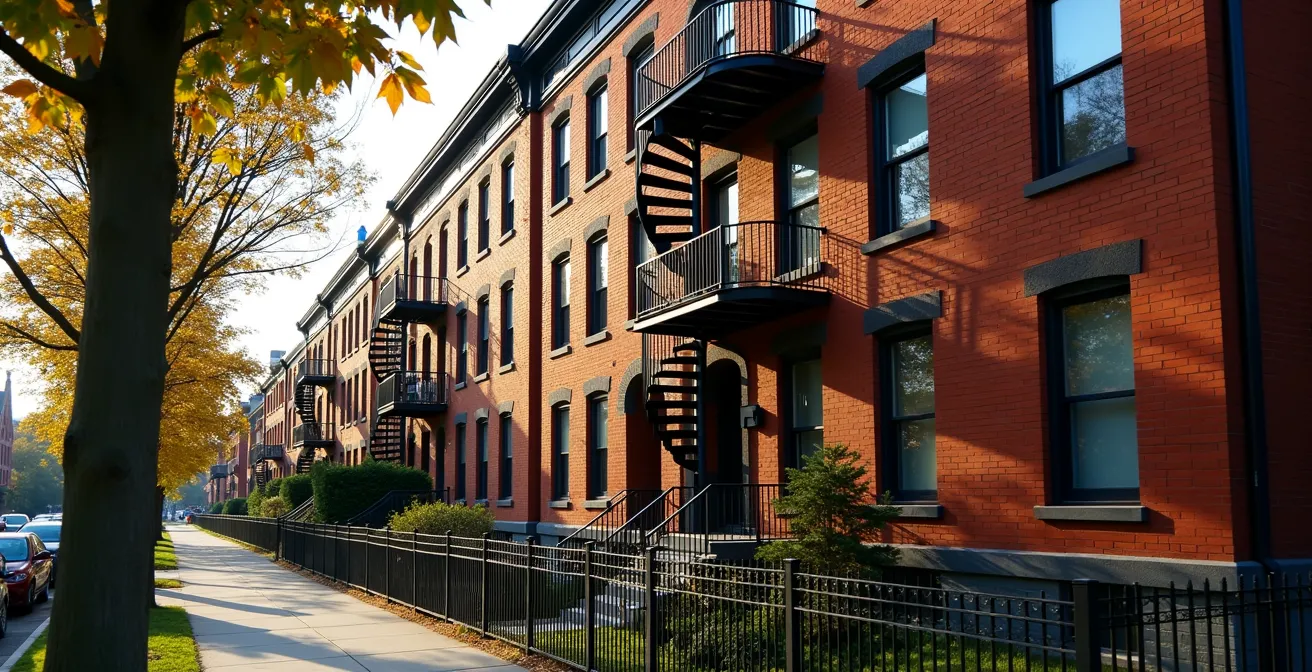
Furthermore, the iconic architecture of Montreal plexes is part of the city’s cultural fabric, contributing to their enduring appeal and value. This structural scarcity of new plex-style buildings, combined with their inherent financial advantages, makes them a cornerstone of a defensive investment strategy. While new condos may offer modern amenities, the plex provides a time-tested model of cash flow, tenant diversity, and capital appreciation that is difficult to replicate.
How the TAL’s Rent Increase Guidelines Impact Your Long-Term ROI?
For many out-of-province investors, Quebec’s rental laws, particularly the guidelines set by the Tribunal administratif du logement (TAL), are a source of significant apprehension. The province is known for its robust tenant protections, and the phrase “rent control” often conjures images of capped returns and limited profitability. However, a sophisticated investor should not view these regulations as a barrier, but as a framework within which to operate strategically. The key is to shift from fighting the system to mastering it, a concept we can term Regulatory Alpha.
The regulatory environment in Quebec is indeed distinct. Market experts have long pointed out that Quebec has historically very strong tenant rights and rent control regulations. Unlike markets driven purely by supply and demand, the TAL provides a calculation method for annual rent increases, factoring in changes in municipal taxes, insurance, and energy costs, plus a return on capital expenditures for major renovations. This creates predictability. While you cannot arbitrarily double the rent, you can achieve consistent, legally-sanctioned increases that compound over time, leading to stable long-term ROI.
The opportunity for generating “Regulatory Alpha” lies in a meticulous approach to property management and capital improvements. The TAL’s formula rewards landlords who invest in their properties. By strategically planning and executing major renovations—such as updating kitchens, bathrooms, or improving a building’s energy efficiency—you can justify significant rent increases that are legally defensible and accepted by the Tribunal. This requires impeccable record-keeping of all expenses and a clear understanding of what constitutes a “major improvement” versus routine maintenance. An investor who masters this documentation and planning process can achieve returns that outpace those who simply rely on the basic annual adjustment, turning a perceived regulatory burden into a competitive advantage.
Credit Checks and TAL Records: How to Screen Tenants Like a Pro?
Acquiring the right asset is only half the battle; securing a reliable, long-term tenant is what transforms a property from a liability into a performing asset. In Quebec’s pro-tenant regulatory environment, the cost and complexity of dealing with a problematic tenancy are significantly higher than in other jurisdictions. Therefore, a rigorous and professional tenant screening process is not just good practice—it is the most critical risk management tool at an investor’s disposal. This due diligence process protects your cash flow, preserves your property’s condition, and minimizes legal headaches.

A professional screening goes far beyond a simple gut feeling or a brief conversation. It is a systematic verification of a candidate’s financial stability, rental history, and legal standing. This involves obtaining comprehensive credit reports to assess their history of financial responsibility, verifying their employment and income to ensure they can comfortably afford the rent, and contacting previous landlords to inquire about their track record as a tenant. Each step provides a crucial piece of the puzzle, allowing you to build a complete picture of the applicant.
In Quebec, an additional and powerful tool is the ability to check the public records of the Tribunal administratif du logement (TAL). This allows you to see if a prospective tenant has a history of disputes with previous landlords, such as non-payment of rent or property damage. This single step can be invaluable in avoiding applicants with a documented history of conflict. By combining these checks, you create a robust screening protocol that significantly de-risks your investment. It is the hallmark of a professional landlord who operates on data, not hope.
Your Tenant Screening Action Plan
- Obtain comprehensive credit reports from Equifax or TransUnion Canada to assess financial history.
- Verify employment status and income level through official documentation like pay stubs or letters of employment.
- Check previous rental references by speaking directly with past landlords to confirm payment history and behavior.
- Review the public TAL database for any previous tenant-landlord disputes or judgments involving the applicant.
- Ensure all screening practices are fully compliant with Quebec’s Charter of Human Rights and Freedoms to avoid discrimination.
Beyond Montreal: Why Gatineau and Sherbrooke Are the New Rental Hotspots?
While Montreal remains the gravitational center of Quebec’s real estate market, a strategy focused solely on the metropolis is incomplete. Sophisticated investors are increasingly looking towards secondary cities that offer unique economic drivers, lower entry costs, and compelling growth trajectories. This practice of demographic arbitrage involves identifying cities where specific economic and population trends create outsized demand for rental housing. Among these, Gatineau and Sherbrooke stand out as prime examples of markets with distinct and powerful investment theses.
Gatineau’s strength is intrinsically linked to its proximity to the nation’s capital. It functions as a bedroom community for Ottawa, attracting a steady stream of federal government employees seeking more affordable housing. This creates a highly stable tenant base with secure, well-paying jobs. The city benefits from Ottawa’s economic engine while offering investors the advantage of Quebec’s real estate prices and, in some cases, lower property taxes than its Ontario counterpart. Sherbrooke, on the other hand, is building a diversified economy of its own. It is a major university hub and is rapidly emerging as a center for technology and innovation, attracting both students and highly skilled professionals.
These differing economic foundations create distinct rental demand profiles and growth potentials, which are critical for an investor to understand when allocating capital. A direct comparison highlights their unique characteristics.
| Factor | Gatineau | Sherbrooke |
|---|---|---|
| Primary Economic Driver | Federal government employment | Universities & emerging tech sector |
| Rental Demand Source | Government workers from Ottawa | Students & tech professionals |
| Property Tax Advantage | Lower than Ottawa | Among lowest in Quebec |
| Growth Potential | Stable, predictable | High growth in tech sector |
As this analysis shows, the choice between Gatineau and Sherbrooke depends entirely on an investor’s risk appetite and strategic goals. Gatineau offers stability and predictability, tethered to the federal government. Sherbrooke presents a higher-growth narrative fueled by its expanding education and technology sectors. Diversifying a portfolio to include such secondary cities can provide a powerful blend of stability and growth that a Montreal-only strategy may lack.
Why Are Young Families Fleeing Montreal for Towns Like Trois-Rivières?
Another powerful demographic shift reshaping Quebec’s rental landscape is the intra-provincial migration of young families. While Montreal attracts young professionals and students, many are forced to look elsewhere as they start families, driven by a search for affordability and space. This exodus is not a sign of Montreal’s weakness, but rather a symptom of its structural scarcity of suitable family-sized housing within the city core. Condos are often too small, and single-family homes are financially out of reach for many. This creates a powerful outflow of demand towards satellite cities and regional hubs.
Cities like Trois-Rivières are perfectly positioned to capture this demographic wave. Strategically located between Montreal and Quebec City, it offers a compelling value proposition: a lower cost of living, access to nature, and a robust local economy. As Multi-Prêts Mortgages highlights in their analysis, “Trois-Rivières is known for its strong economy and booming industrial sector, as well as its rich cultural heritage. It’s also a popular destination for outdoor enthusiasts.” This combination of economic opportunity and lifestyle quality makes it an ideal destination for families seeking a better balance than the dense urban core can provide.
The affordability gap is stark. The 2025 Canada Rental Market Trend Report notes that condos in Montreal average around $420,000. While significantly less than in other major Canadian cities, this price point is still a major hurdle for a young family also contending with high interest rates and the rising cost of living. In contrast, the same budget can secure a much larger property, or even a single-family home, in a city like Trois-Rivières. For real estate investors, this trend is a clear signal. Investing in three-bedroom rental units or small multi-family properties in these destination cities for young families taps into a growing, non-speculative demand stream that is likely to persist for years to come.
Why Betting on a Single-Industry Town Is a Dangerous Game for Your Portfolio?
The allure of a boomtown can be powerful. A new mine, a large factory, or a major resource project can create a sudden surge in jobs and an immediate, intense demand for housing. For an investor, the prospect of rapidly rising rents and property values is tempting. However, building a portfolio on the foundation of a single-industry economy is one of the most dangerous games in real estate. While the upside can be high, the downside can be catastrophic, as the town’s entire economic fate is tied to the fortunes of one company or one commodity.
An economically diversified location, with a mix of public sector, private enterprise, healthcare, education, and technology employers, offers resilience. If one sector experiences a downturn, others can provide a buffer, stabilizing employment and, by extension, the rental market. In a single-industry town, a downturn in that industry doesn’t just mean a few layoffs; it can mean the entire town’s economic engine grinds to a halt. This leads to a mass exodus of workers, a spike in vacancy rates, and a collapse in property values from which it can take decades to recover.
This is not a theoretical risk; it is a painful reality written into the history of many of Quebec’s regions. A stark example serves as a powerful lesson for any investor considering this type of play.
Case Study: The Decline of Mining Towns in Abitibi-Témiscamingue
Historically, several towns in Quebec’s Abitibi-Témiscamingue region were built around the mining industry. During periods of high commodity prices, these communities thrived, and real estate values soared. However, when mines inevitably closed due to resource depletion or falling prices, the impact was devastating. With the primary employer gone, workers left in droves, leading to widespread property abandonment and a severe, long-lasting decline in real estate values, demonstrating the acute risks of single-industry dependency for real estate investors.
The lesson for a sophisticated investor is clear: economic diversification is a non-negotiable criterion when evaluating a potential market. Chasing the quick profits of a boomtown often means ignoring the fundamental principles of risk management. A truly resilient portfolio is built on the stable foundations of a multi-faceted economy, not the precarious stilts of a single industry.
Key Takeaways
- Quebec’s strong immigration and student populations create specific, predictable rental demand in university-proximate areas.
- Mid-density plexes offer greater control and tenant diversity, representing a more resilient asset class than speculative high-rise condos.
- Mastering the TAL’s regulations for capital improvements allows investors to achieve predictable, legal rent increases and superior long-term ROI.
Commercial Multi-Res: Making the Leap from Plexes to 5+ Unit Buildings
For many investors who have successfully built a portfolio of duplexes and triplexes, the next logical frontier is scaling up to larger, commercial multi-residential properties of five or more units. This is more than just adding doors; it represents a fundamental shift in strategy, financing, and management. Making this leap successfully requires understanding the capital stack transition from a residential to a commercial lending mindset. While the principles of finding good locations and tenants remain, the financial underwriting of the deal changes completely.
The most significant change lies in how lenders evaluate the loan. For residential mortgages (1-4 units), financing is largely based on the investor’s personal income and creditworthiness. The bank’s primary question is, “Can you personally cover the mortgage if the property is vacant?” For commercial financing (5+ units), the focus shifts from the individual to the asset itself. The lender’s primary question becomes, “Can the property’s income cover its operating expenses and debt service?” This is measured by the Debt Coverage Ratio (DCR), which must typically be above a certain threshold (e.g., 1.2x). Your personal finances still matter, but the property’s performance is paramount. This shift is a key reason why a well-managed building with strong cash flow can be an attractive acquisition, even for an investor with moderate personal income.
This transition also impacts down payments, interest rates, and the required documentation. Investors should be prepared for these new realities, which are significantly different from the CMHC-insured world of residential investing. The returns, however, can justify the increased complexity, with benchmark data showing solid performance for this asset class. For instance, recent reports showed average 4.5% cap rates for multi-family properties in 2024, indicating stable investment yields. The table below outlines the key differences an investor must prepare for when making the leap.
| Aspect | 1-4 Units (Residential) | 5+ Units (Commercial) |
|---|---|---|
| Down Payment | 5-20% (CMHC insured) | 25-35% minimum |
| Financing Criteria | Personal income based | Property income (DCR) based |
| Interest Rates | Lower residential rates | Higher commercial rates |
| Documentation | Standard mortgage application | Full investment package required |
By shifting your perspective from simple asset accumulation to sophisticated portfolio management—understanding demographic flows, mastering regulations, and strategically scaling—you can build a truly resilient and profitable real estate portfolio in Quebec. To apply these principles effectively, the next step is to conduct a detailed analysis of specific target markets and asset classes that align with your investment thesis.