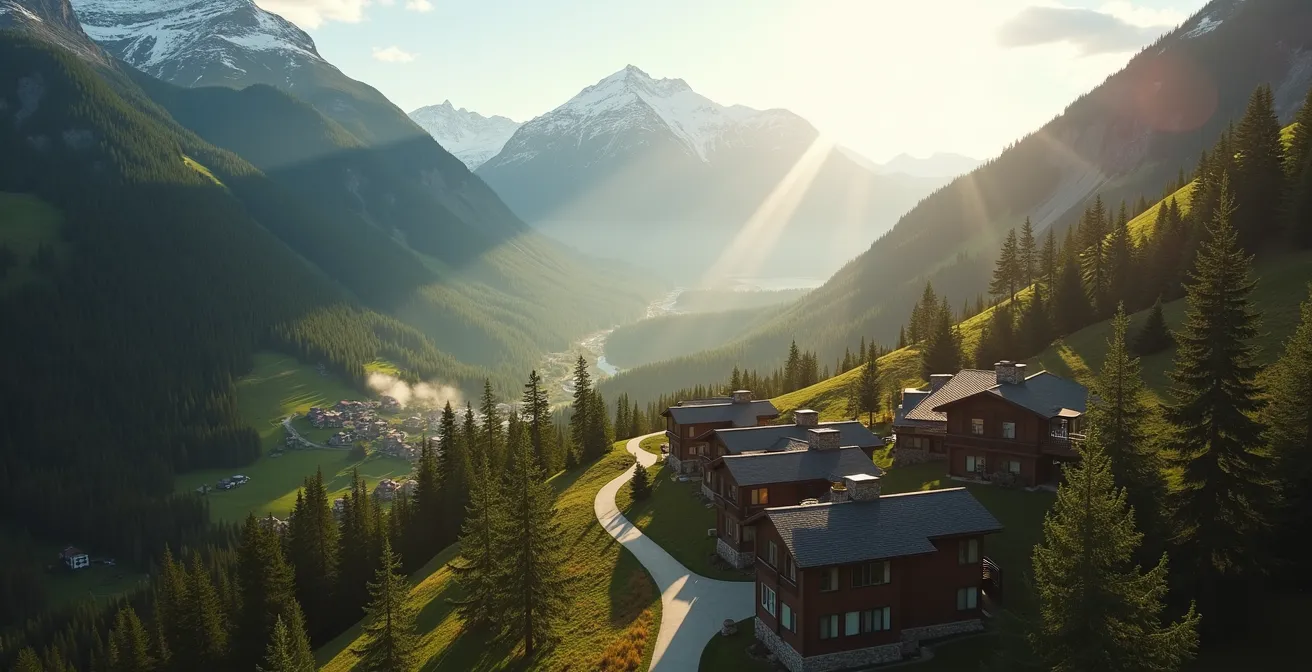
The real premium for “trailside” properties isn’t the view, but the legally guaranteed, well-managed access to a recreational network.
- Vast Crown lands and private easements mean “next to the woods” doesn’t guarantee access; due diligence on property rights is critical.
- Targeting outdoor enthusiasts yields higher rental premiums and better guests, but requires specific amenities and proactive liability management.
Recommendation: Investors should analyze a property’s trail infrastructure and legal access rights with the same rigour they apply to building inspections.
For an active buyer, the dream is simple: a home where the backyard dissolves into a network of hiking trails. This desire for seamless access to the outdoors is reshaping real estate markets in towns from Squamish, BC, to Bromont, QC. The common wisdom is that a “property with a view” or “near a park” commands a higher price. This is true, but it’s a dangerously incomplete picture. It focuses on the passive aesthetic of nature rather than the active, tangible asset of a trail system.
The real estate conversation often stops at proximity, failing to ask the critical questions. Do you have legal right-of-way, or are you just trespassing on a neighbour’s lot or unmanaged Crown land? Is the trail a well-maintained asset or an uninsurable liability? Focusing only on the beauty of the surrounding forest is like buying a car for its paint job without checking the engine. The true, sustainable value lies not in the scenery, but in the underlying infrastructure—legal, physical, and commercial—that makes outdoor recreation possible.
This article moves beyond the superficial “park effect.” We will deconstruct the real drivers of value in Canada’s trail towns. We’ll explore the crucial difference between public and private access, quantify the benefits of attracting the right kind of guest, and outline the strategies for managing your land as a recreational asset. It’s time to stop looking at property lines and start mapping the trail networks that define a new class of real estate investment.
This guide provides a comprehensive look at the strategic factors that turn a simple property into a lucrative gateway to the outdoors. Explore the sections below to understand the legal, financial, and practical dimensions of investing in Canada’s adventure real estate market.
Summary: Unlocking Real Estate Value Through Trail Networks
- Public vs. Private Trails: Do You Have Legal Access to the Woods Behind Your House?
- Hikers vs. Partiers: Why Targeting Outdoor Enthusiasts Makes for Better Guests?
- Living Remotely: Who Pays if You Get Lost or Injured on Your Property?
- Woodlot Management: How to Maintain a Private Forest for Hiking and Health?
- Land Trusts: How Donating Land for Trails Can Give You a Tax Break?
- The “Park Effect”: How National Parks Guarantee Occupancy for Airbnbs?
- Ski, Bike, Hike: Location Strategy for Adventure-Focused Accommodations
- Hospitality in Quebec: Why Experience-Based Stays Are Outperforming Standard Hotels?
Public vs. Private Trails: Do You Have Legal Access to the Woods Behind Your House?
The most alluring feature of a rural property—the sprawling forest just beyond the lawn—can also be its most significant legal trap. In Canada, land ownership is a complex tapestry of private titles, Indigenous territories, and vast tracts of Crown land. Assuming the trail you see is a trail you can use is a rookie mistake. The legal distinction between public and private access is the absolute foundation of a trailside property’s value. A property with a deeded, legal easement to a managed trail network is an entirely different asset class than one that merely borders a forest you can’t legally enter.
The scale of this issue is immense. For example, 94% of British Columbia is provincial Crown land, while only 2% of Prince Edward Island is. Each province has its own rules for access, recreation, and leasing on these lands. A trail might be an official public right-of-way, a permitted path managed by a local club, an informal “trespass trail” used by locals for years, or a strictly private path. Verifying your rights is not optional; it’s the most crucial piece of due diligence you can perform. Without confirmed legal access, you aren’t buying a trail home; you’re buying a home with a nice view of someone else’s trail.
Your Action Plan: Verifying Trail Access Rights in Canada
- Access Property Online: Use your provincial Land Registry office’s online portal to search for property boundaries and identify adjacent Crown land parcels.
- Review Your Title: Scrutinize your property title documents for any existing trail easements, right-of-way agreements, or other annotations that grant or restrict access.
- Check Crown Land Index Sheets: For deeper research, visit a provincial Natural Resources library or office to consult Crown Land Index Sheets, which map out leases and licenses.
- Consult Local First Nations: If trails may cross traditional territories, it is essential and respectful to consult with the relevant First Nations governments regarding their protocols and rights.
- Verify Recreational Licenses: Check for any recreational licenses or leases on adjacent Crown lands that could affect public trail access, such as forestry operations or private tenures.
Hikers vs. Partiers: Why Targeting Outdoor Enthusiasts Makes for Better Guests?
Once legal access is confirmed, the next strategic layer is curating your ideal guest. Not all renters are created equal. A property marketed to “get away from it all” can attract weekend partiers who cause damage and disturb neighbours. Conversely, a property marketed specifically to outdoor enthusiasts—hikers, bikers, climbers, trail runners—attracts a premium clientele. These guests are not just looking for a place to sleep; they are looking for a basecamp. They value functional amenities over frivolous luxuries and are willing to pay more for a property that actively supports their passion.
This isn’t just theory; it’s proven in the market. The case of Miral Heights in Trail, BC, provides a clear example. Properties in this subdivision command premium prices specifically because they offer direct, walk-out access to a network of hiking and biking trails. A listing for 2450 McBride Street explicitly highlights this access as a primary selling point, demonstrating how trail proximity directly drives both residential and rental value. These buyers and renters see the trails not as a backdrop, but as the main event. They are more likely to be respectful of the property and the surrounding environment because their entire trip is centered on enjoying it.

Attracting this high-value segment requires a strategic approach. It means providing amenities that cater to their specific needs. Think less about hot tubs and more about a secure gear garage, a bike wash station, a boot dryer, or providing local trail maps and GPS devices. These features signal that you understand their needs and justify a higher nightly rate. As the following comparison of Canadian outdoor guest segments shows, the premium is substantial.
| Guest Type | Average Stay | Premium Willing to Pay | Key Amenities Required |
|---|---|---|---|
| Squamish Rock Climber | 3-5 days | 20-30% above base | Gear garage, drying room, route maps |
| Canmore Family Weekender | 2-3 days | 15-25% above base | Kids’ gear storage, family trail guides |
| Bromont Trail Runner | 2-4 days | 10-20% above base | Trail access, hydration station, recovery space |
Living Remotely: Who Pays if You Get Lost or Injured on Your Property?
The wild beauty of a remote, trail-adjacent property comes with an inherent and often-overlooked element of risk. The same isolation that provides peace and quiet can become a critical liability if something goes wrong. For owners, especially those renting their property, a crucial question must be answered: if a guest gets lost or injured while using a trail on your land, who is responsible? The answer is complex and can have significant financial and legal consequences.
Standard homeowner’s insurance policies may not adequately cover incidents that occur on private recreational trails, especially in a commercial rental context. This creates a potential liability gap that could expose an owner to costly lawsuits. Furthermore, in remote areas, search and rescue operations can be expensive. While these services are often covered by provincial bodies for the public, the lines can blur on private land used for commercial purposes. An injury that occurs due to a poorly maintained trail, inadequate signage, or a failure to warn of known hazards could be deemed the owner’s responsibility.
Proactive risk management is therefore not just good practice; it’s essential for protecting your investment. This involves clear communication with guests about risks, providing safety equipment like personal locator beacons, and ensuring your property and its trails are as safe as reasonably possible. It also means having a frank discussion with your insurance broker about specific riders or policies that cover third-party liability for recreational activities. Ignoring this aspect is a gamble no property owner should be willing to take.
Woodlot Management: How to Maintain a Private Forest for Hiking and Health?
Owning a piece of the Canadian wilderness is a privilege that comes with the responsibility of stewardship. For a property with private trails, this means actively managing your woodlot not just for aesthetic appeal, but for ecological health, user safety, and long-term sustainability. A neglected forest can quickly become an overgrown, fire-prone liability with impassable trails. A well-managed woodlot, however, becomes a thriving recreational asset that can even provide financial benefits through tax incentives.
Provinces across Canada offer programs designed to encourage sustainable forestry on private lands. Ontario’s Managed Forest Tax Incentive Program (MFTIP) and British Columbia’s Private Managed Forest Land Program, for example, can reduce property taxes by up to 75% for landowners who follow a registered management plan. These plans often include specifications for trail development, wildlife habitat enhancement, and sustainable harvesting. By aligning your hiking trail goals with a formal management plan, you can significantly lower your carrying costs.
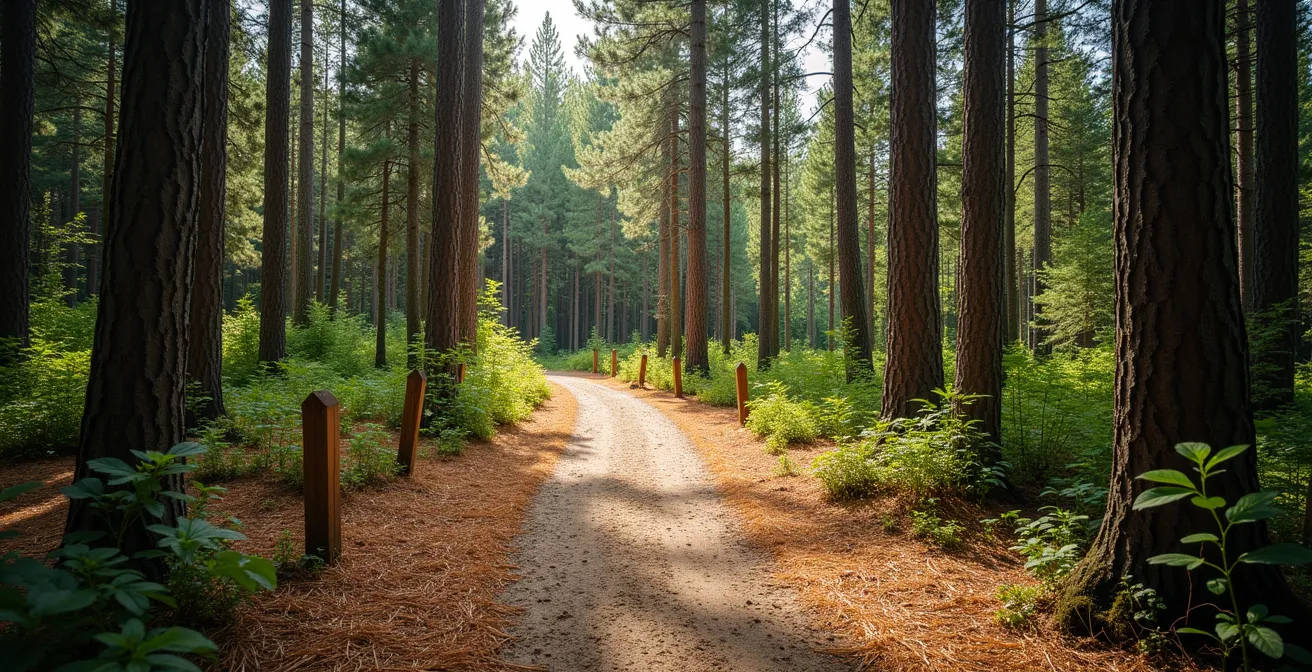
Effective management also involves mitigating risks, with wildfire being paramount. Applying principles from FireSmart Canada to create defensible spaces around structures and thin out dense undergrowth is crucial for protecting your investment. For the trails themselves, partnering with professional organizations like affiliates of IMBA (International Mountain Bicycling Association) Canada can ensure they are designed sustainably to prevent erosion and minimize environmental impact. A well-maintained private forest is a safe, beautiful, and financially sound asset that enhances property value for years to come.
Land Trusts: How Donating Land for Trails Can Give You a Tax Break?
For landowners passionate about conservation and community, there is a powerful tool that aligns financial incentives with public good: the trail easement. Instead of selling land, you can donate or sell the development rights or a right-of-way for a trail to a qualified land trust or municipality. This act of permanent conservation not only creates a lasting legacy for public recreation but can also provide significant tax advantages through federal and provincial programs.
Canada’s Ecological Gifts Program is a key mechanism for this. When you donate an easement on ecologically sensitive land, you receive a tax receipt for the appraised value of the donation. This can generate substantial tax credits to offset income tax. For instance, an analysis shows that donating a trail easement valued at $100,000 can result in federal and provincial tax credits that effectively fund the conservation effort. This turns a portion of your land into a community asset while providing a direct financial return.
Community Impact in Nova Scotia
In Nova Scotia, where roughly 29% of the province is Crown land, the interplay between private and public lands is vital for recreation. Private landowners who donate trail easements to connect communities or provide access to Crown lands build immense social capital. These donations are not just transactions; they become beloved local assets used for hiking, fishing, and recreation by all Nova Scotians, creating a powerful community legacy while providing tax benefits to the donor.
This strategy reflects a core principle of Canadian land philosophy. As the Government of Canada states in its guide to federal property, “Federal real property is to be used for the benefit of the people of Canada. Therefore, one person should not be able to gain an interest in federal real property at the expense of all other Canadians without the Crown’s knowledge and approval.” Donating an easement is a way for private citizens to actively participate in this vision of shared benefit.
The “Park Effect”: How National Parks Guarantee Occupancy for Airbnbs?
While hyper-local trail access is a key value driver, the macro-level influence of Canada’s National Parks creates an undeniable gravitational pull for real estate investment. Properties in “gateway communities”—towns bordering major parks—benefit from a constant, predictable stream of tourism that all but guarantees demand for short-term rentals. This is the “Park Effect,” and it’s a powerful force for any investor.
The numbers are staggering. According to Parks Canada data, Banff National Park attracted 4.13 million visitors in 2022/23, with the mountain parks collectively drawing over 9 million people. This massive influx of visitors creates a huge demand for accommodation that park infrastructure alone cannot meet. When campsites and park-run oTENTiks are fully booked—which often happens minutes after reservations open—that demand spills over directly into the private rental market of towns like Canmore, Jasper, and Field.
For a savvy investor, Parks Canada’s own data is a powerful tool for market analysis and investment timing. By monitoring key indicators, you can anticipate demand surges and position your property to capitalize on them. Smart strategies include:
- Monitoring Parks Canada reservation opening dates (typically in January for the summer season) to anticipate the booking frenzy.
- Tracking campsite and oTENTik booking fill rates; when they hit 90%+, it signals guaranteed overflow into private accommodations.
- Identifying emerging park gateways, like the Bruce Peninsula in Ontario, that are showing strong visitor growth.
- Targeting shoulder seasons with known draws, such as the “larch madness” in the Rockies during fall or Pacific storm watching season near Pacific Rim National Park.
Investing near a national park is like anchoring your business next to a global tourist magnet. The park does the marketing for you, delivering millions of potential guests to your doorstep year after year.
Ski, Bike, Hike: Location Strategy for Adventure-Focused Accommodations
The most resilient and profitable trail towns in Canada have evolved beyond a single-season identity. The old model of a “ski town” that goes dormant in the summer is being replaced by a dynamic, four-season resort strategy. Visionary destinations like Whistler, Mont-Tremblant, and Blue Mountain have successfully transformed themselves by investing heavily in summer trail infrastructure, turning their winter assets into year-round revenue generators.
This transformation is a masterclass in location strategy. These resorts realized their most valuable asset wasn’t snow, but mountains. They built world-class downhill mountain bike parks, extensive networks of cross-country and hiking trails, and added attractions like zip lines and alpine coasters. This investment in summer infrastructure creates a second peak season, smoothing out occupancy rates and property income throughout the year. The Sunshine Coast Trail in BC, a 180-km hut-to-hut hiking route, exemplifies how a single piece of trail infrastructure can create accommodation demand across an entire region, completely independent of ski season.
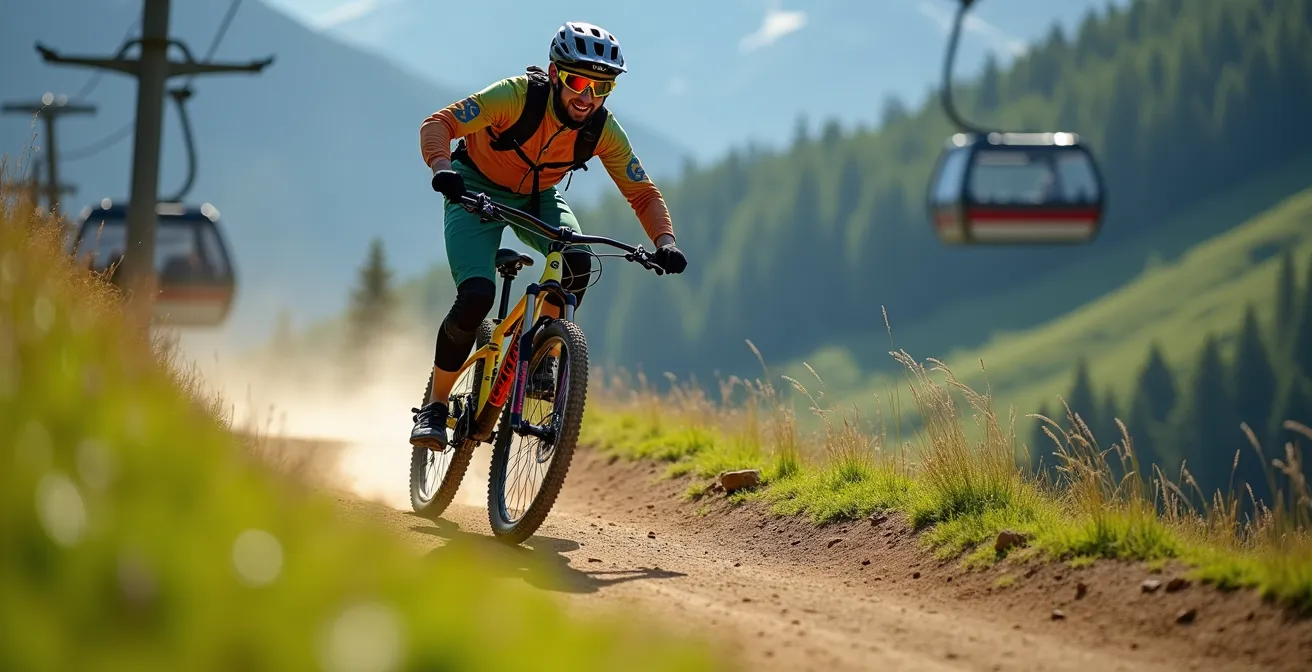
The return on this infrastructure investment is clear and quantifiable, resulting in significant property value premiums compared to single-season locations. A property in a four-season resort offers an owner twelve months of potential income, making it a fundamentally more stable and valuable asset. As the data shows, the correlation between year-round infrastructure and property value is undeniable.
| Resort | Summer Infrastructure | Property Premium vs Base | Year-Round Occupancy |
|---|---|---|---|
| Whistler | Bike park, gondola, festivals | 45-60% | 85%+ |
| Mont-Tremblant | Golf, bike trails, village events | 35-50% | 75%+ |
| Blue Mountain | Beach access, trails, attractions | 30-40% | 70%+ |
Key Takeaways
- Legal access is paramount; “next to the woods” is not a guarantee. Due diligence on easements and Crown land is non-negotiable.
- Targeting specific outdoor enthusiasts (hikers, bikers) yields higher premiums and better guests than generic marketing.
- Proactive risk management, including proper insurance and land stewardship, is essential for protecting your remote property investment.
- The most valuable recreational properties are in four-season destinations that have invested heavily in summer trail infrastructure.
Hospitality in Quebec: Why Experience-Based Stays Are Outperforming Standard Hotels
The final layer of a successful trail town investment strategy goes beyond the physical infrastructure of trails and into the realm of curated experiences. Nowhere is this more evident than in Quebec, where a unique blend of natural assets and cultural “terroir” has given rise to a new class of experience-based accommodations that consistently outperform standard hotels. These properties understand that modern travelers, especially those drawn to the outdoors, seek more than just a room—they seek a story and a connection to place.
This model thrives by weaving the property into the local fabric. It means leveraging Quebec’s extensive trail networks like the Route Verte for cyclists or the Sentier National for hikers as built-in marketing channels. An accommodation isn’t just “near” the trail; it’s an integral part of the trail experience. This approach also extends to cultural and culinary trails, like partnering with local producers along the “Route des cidres” to offer exclusive tasting packages. As Bill Kendrick of Go For a Walk PEI noted about a similar initiative, “The Island Walk weaves through areas that don’t traditionally see a lot of tourism,” demonstrating how trail infrastructure can create entirely new economic ecosystems.
For investors in Quebec, this means thinking like an experience designer. Success hinges on complying with regulations from the Corporation de l’industrie touristique du Québec (CITQ) for unique accommodations like yurts or tiny homes, and then building a unique value proposition around that offering. This could involve:
- Positioning your property as an official stop along a major hiking or cycling route.
- Creating exclusive packages with local fromageries, microbrasseries, or artisans.
- Leveraging Quebec’s stunning fall colours or winter landscapes for season-specific experiences.
- Marketing the unique “prêt-à-camper” (ready-to-camp) classification to attract guests seeking comfort in nature.
Ultimately, the lesson from Quebec is that the most profitable investment isn’t just a building near a trail, but a business that serves as a gateway to a complete, authentic regional experience.
By shifting your focus from passive views to active infrastructure—legal, physical, and experiential—you can unlock the true and lasting value of real estate in Canada’s vibrant trail towns. Analyze access, cater to the enthusiast, manage your risk, and curate an experience, and your property will become more than a home—it will be a destination.
Frequently Asked Questions About Trailside Property Investment
Does standard homeowner’s insurance cover trail injuries on my property?
Standard policies often have gaps regarding liability for guests injured on private trails. It is highly recommended to speak with an insurance broker about a specific third-party liability rider, especially for properties being used as short-term rentals, to ensure you are adequately covered.
Should I provide Personal Locator Beacons to guests?
Offering safety devices like a Garmin inReach or a SPOT beacon as an amenity is a mark of a professional host. It not only enhances guest safety and peace of mind but can also be a value-added feature that helps justify a 10-15% premium on your nightly rental rates while demonstrating a high standard of care.