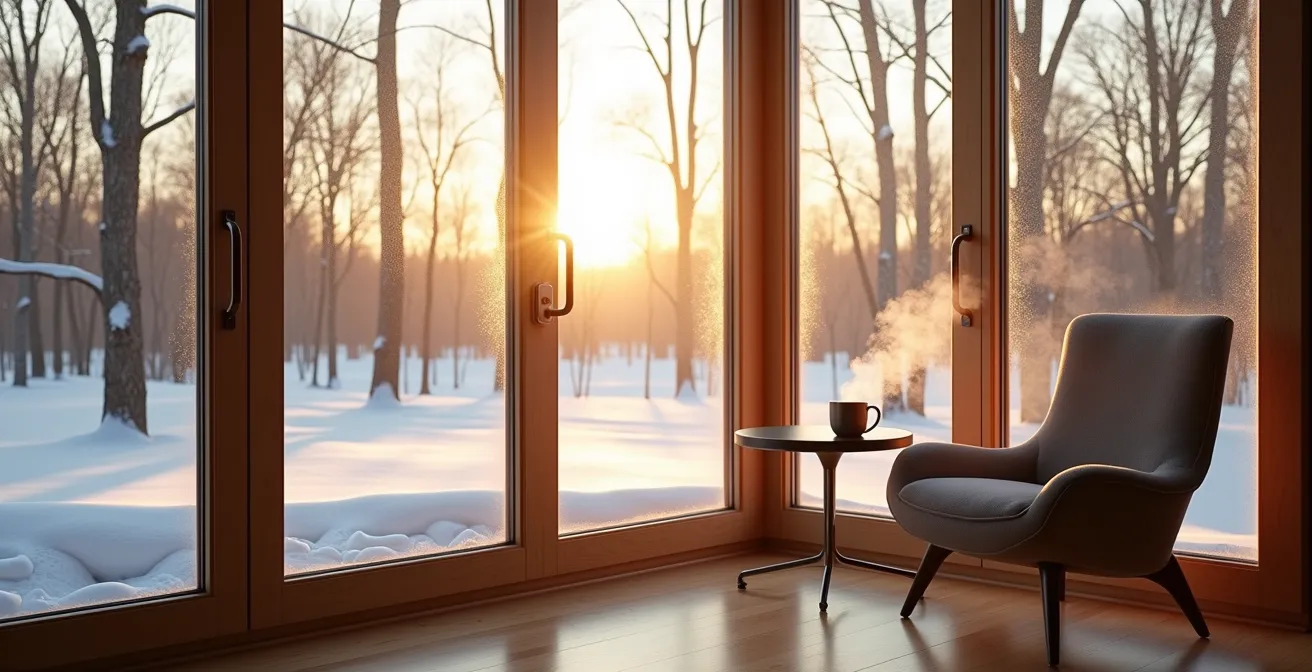
The critical choice isn’t double vs. triple glaze; it’s about engineering a complete, high-performance window system that survives Quebec winters and qualifies for grants.
- A high-end triple-pane window is useless if compromised by a cheap frame or a “retrofit” installation that hides rot and creates air leaks.
- Combining Quebec’s Rénoclimat program with the federal Canada Greener Homes Grant is a key strategy to make the higher initial cost of a superior window system financially viable.
Recommendation: Base your decision on certified U-values and a mandatory brick-to-brick installation plan, not just the pane count. This ensures true thermal performance and maximizes your return on investment.
That $20,000 quote for new windows lands like a ton of bricks. It’s a significant investment, and the central question for any Quebec homeowner is immediate: is this necessary? The debate quickly pivots to “triple-glaze versus double-glaze,” as if the number of glass panes is the only factor. This is a common and costly oversimplification. While the glass is important, focusing on it alone is like choosing a car engine without considering the transmission, chassis, or tires. You might have power, but you won’t get performance.
The real issue isn’t the glass; it’s the integrity of the entire building envelope system. A window’s true performance in our harsh climate is determined by a combination of factors: its certified thermal performance (the U-factor), the material and construction of its frame, the quality of the installation, and its verified airtightness. A cheap installation can completely negate the benefits of expensive triple-pane glass, leaving you with the same drafts and high heating bills, but a much lighter wallet. The high quote you received likely reflects not just the window itself, but a comprehensive solution designed to work as a complete system.
This guide will shift your perspective. We will move beyond the superficial double-vs-triple debate and give you the framework of a fenestration expert. We will deconstruct what really matters: reading an ENERGY STAR label for grant eligibility, understanding why the installation method is non-negotiable, and strategically stacking provincial and federal grants. By the end, you’ll understand that you’re not just buying windows; you’re investing in a quantifiable, long-term improvement to your home’s comfort and energy efficiency.
To help you navigate this complex decision, this article breaks down the essential components of a successful window replacement project in Quebec. From understanding energy ratings to securing financing, we will cover the critical steps to ensure your investment pays off for decades to come.
Summary: A Homeowner’s Guide to High-Performance Windows in Quebec
- Energy Star Ratings: How to Read the Label to Ensure Grant Eligibility?
- Vinyl (PVC) vs. Aluminum Hybrid: Which Frame Lasts Longer?
- Brick-to-Brick vs. Retrofit: Why Cheap Installation Ruins Good Windows?
- Why Do My New Windows Have Condensation on the Outside?
- Wood Windows: Dealing with Heritage Requirements in Protected Zones
- How to Get a Renovation Permit Approved in a Heritage District Without Delays?
- The Blower Door Test: Why You Must Do It Before Touching a Single Wall?
- Energy Efficiency in Quebec: How to Get MaPrimeRénov to Pay for Your Upgrades?
Energy Star Ratings: How to Read the Label to Ensure Grant Eligibility?
The ENERGY STAR label on a window is not a simple pass/fail sticker; it’s a data sheet detailing the window’s performance. For a Quebec homeowner, the single most important value to understand is the U-factor. This number measures the rate of heat transfer through the window. The lower the U-factor, the better the window is at keeping your home’s heat inside during the winter. It’s the primary metric that determines a window’s suitability for our cold climate and, crucially, its eligibility for government grants.
To qualify for financial assistance programs like Rénoclimat in Quebec, your new windows must meet stringent performance criteria. The current benchmark requires an ENERGY STAR certified window with a U-factor of 1.22 W/m²K or lower. Choosing a window with a U-factor of 1.25, for example, might save you a small amount upfront but would disqualify you from receiving hundreds of dollars in grants per window, making it a poor financial decision. A triple-pane window will almost always have a lower U-factor than a double-pane equivalent, making it the default choice for maximizing energy savings and grant acquisition.
Furthermore, the Canada Greener Homes Grant offers a substantial incentive, but it comes with strict rules. The program provides up to $250 per rough opening for high-efficiency windows, to a maximum of $5,000. It’s critical to note that a large bay window with three separate window units installed into a single large opening only counts as one rough opening, qualifying for only one grant payment. You must also keep the ENERGY STAR labels physically on your windows until after the post-retrofit energy evaluation is complete. Removing them prematurely can void your grant eligibility. Always verify the specific U-factor and ensure it’s documented on your contract before signing.
Vinyl (PVC) vs. Aluminum Hybrid: Which Frame Lasts Longer?
The performance of your expensive triple-pane glass is directly dependent on the frame that holds it. The frame is a potential thermal weak point, and the material choice impacts insulation, durability, and long-term maintenance. In Quebec, the two dominant choices are all-Vinyl (PVC) and Aluminum Hybrid (often a PVC structure with an aluminum exterior cladding). The idea that one “lasts longer” is nuanced; it’s more about which material’s properties best match your home’s needs and budget.
Vinyl (PVC) frames are the champions of thermal insulation. Their multi-chambered construction creates dead air spaces that significantly reduce heat transfer, complementing the insulating properties of a triple-pane glass unit. They are highly resistant to rot and insects and require virtually no maintenance beyond cleaning. This makes them an extremely cost-effective and energy-efficient choice for the majority of residential applications in our cold climate. Their primary limitation is in structural strength and colour options; large windows may require reinforcement, and colour choices are often limited to lighter shades to prevent heat distortion.
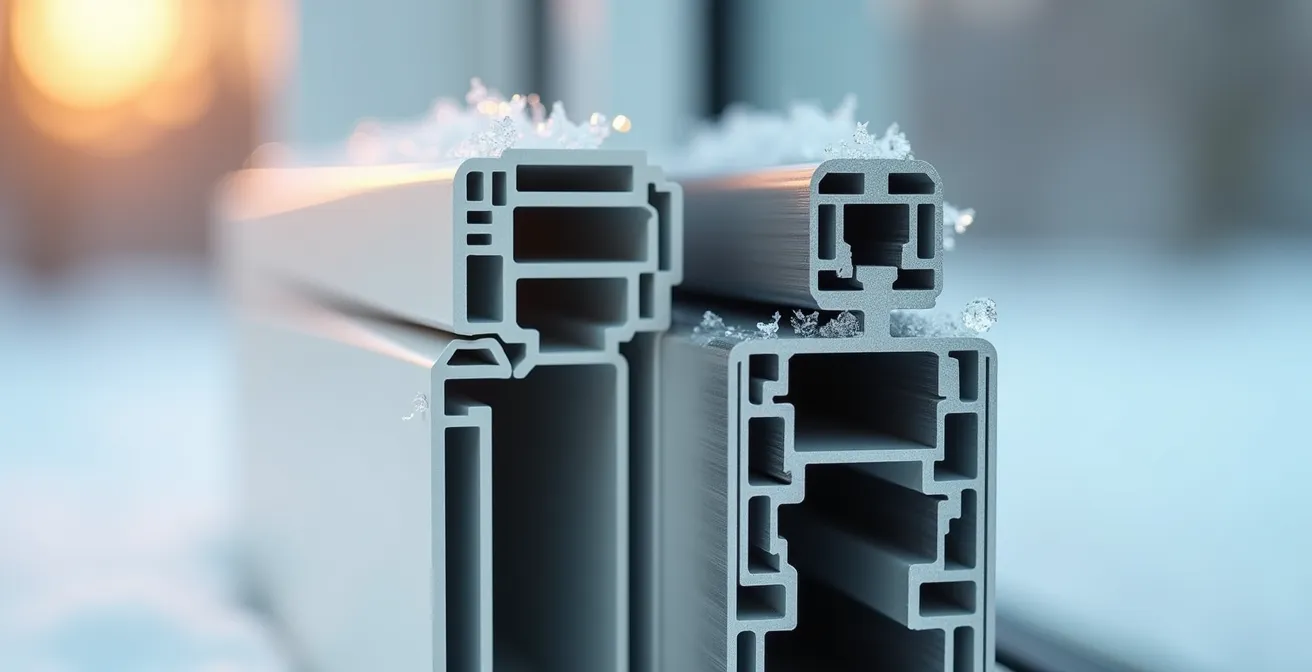
Aluminum Hybrid frames offer superior strength and aesthetics. The exterior aluminum cladding provides immense rigidity, allowing for larger window designs and darker, more durable colour finishes that are popular in modern architecture. The interior structure, usually PVC, contains thermal breaks to reduce the high conductivity of the aluminum. While they handle temperature swings exceptionally well and offer a premium look, they come at a higher initial cost and their insulation value, while good, is typically not as high as a comparable all-vinyl frame. The choice depends on balancing the budget with architectural goals.
The following table, based on industry data, highlights the key differences to consider when selecting a frame material for the Canadian climate. Note how the exceptional insulation of vinyl contrasts with the superior strength of hybrid frames.
| Feature | Vinyl (PVC) | Aluminum Hybrid |
|---|---|---|
| Maintenance | Low – never needs painting | Low – durable finish |
| Insulation Value | Exceptional | Good with thermal breaks |
| Durability | Resists rot & insects | Superior strength |
| Cost | Most affordable | Higher initial cost |
| Climate Performance | Excellent in cold | Handles temperature swings well |
Brick-to-Brick vs. Retrofit: Why Cheap Installation Ruins Good Windows?
You can purchase the highest-rated, triple-pane, hybrid-frame window on the market, but if it’s installed poorly, you’ve wasted your money. The single biggest mistake a homeowner can make is opting for a “retrofit” or “insert” installation to save on short-term costs. This method involves placing the new window inside the frame of the old one, a practice that is a massive gamble, especially in Quebec’s older housing stock. This is where the concept of installation integrity becomes paramount.
A retrofit installation leaves the original wooden sub-frame hidden and uninspected. As window installation experts point out, this shortcut can have severe consequences. According to a leading Canadian window replacement guide, this is a major red flag:
A ‘retrofit’ installation in older homes can hide rotted wooden sub-frames, leading to structural issues and water damage that new window warranties won’t cover.
– Window installation experts, Canadian window replacement guide discussion
The only correct method for a full window replacement is a brick-to-brick (or full-frame) installation. This process involves removing the old window, frame, and trim entirely, right down to the rough opening in the wall. This allows the installer to inspect the structural stud for rot or damage, properly install a new air/vapor barrier membrane, and correctly insulate the gap between the new window frame and the house frame. This guarantees a continuous, airtight seal, eliminating the drafts and heat loss that a retrofit would leave behind. It’s more labor-intensive and thus more expensive, but it’s the only way to ensure your new windows actually perform to their U-factor rating. Your $20,000 quote almost certainly accounts for this superior, non-negotiable method.
To protect your investment, you must vet your installer rigorously. Before signing any contract, arm yourself with these essential questions:
- Do you perform brick-to-brick installations that expose the rough opening?
- What type of air/vapor barrier membrane do you use?
- How do you insulate the gap between the frame and the rough opening?
- Are you licensed with the Régie du bâtiment du Québec (RBQ)?
- Do your installation methods meet Quebec Construction Code standards?
Why Do My New Windows Have Condensation on the Outside?
After investing thousands of dollars in new, high-efficiency triple-pane windows, seeing moisture on them can be alarming. However, if that condensation is on the *exterior* surface of the glass on a cool, humid morning, it’s not a defect. It is, in fact, the most visible proof that your windows are performing exceptionally well. This phenomenon is a direct consequence of the superior insulating power you paid for.
A triple-pane glass unit is so effective at blocking heat transfer that very little warmth from inside your home reaches the outermost pane of glass. As a result, this outer pane remains cold, close to the ambient outdoor temperature. When the morning air is humid and its temperature rises faster than the glass, the air’s dew point can become higher than the surface temperature of the glass. This causes moisture from the air to condense on the cold surface, just like on a cold drink in summer. This external condensation is a hallmark of windows with a very low U-factor and is a clear sign that your heat is staying inside your house.
Conversely, condensation on the *interior* surface of the glass in winter is a problem. It indicates one of two things: either the window’s seals have failed and the inert gas has escaped (a warranty issue), or more commonly, the humidity level inside your home is too high. Modern, airtight homes can trap moisture from cooking, breathing, and showers. Managing indoor humidity between 30-50% with a proper ventilation system, like a Heat Recovery Ventilator (HRV), is crucial. Triple-pane windows boast a significantly better performance, with some manufacturers reporting a 20% better energy rating than double-pane equivalents, which directly contributes to warmer interior glass surfaces and reduced risk of interior condensation.
Wood Windows: Dealing with Heritage Requirements in Protected Zones
Replacing windows in a designated heritage district like Old Quebec, Westmount, or parts of the Plateau Mont-Royal introduces a complex layer of aesthetic regulation. The goal of municipal committees is to preserve a building’s historical character, which often seems at odds with modern energy efficiency standards. The classic, multi-paned look of a traditional wood window is difficult to replicate with standard, bulky vinyl frames. However, modern fenestration technology offers sophisticated solutions that can satisfy both heritage committees and your heating bill.
The primary challenge is replicating the slim profiles and detailed mouldings of historical wood windows while incorporating a thick, high-performance triple-pane glass unit. Fortunately, specialized manufacturers now produce custom wood windows designed specifically for this purpose. These units use high-quality wood species and advanced engineering to maintain a traditional appearance with modern thermal performance. They are the premium choice for an authentic restoration.
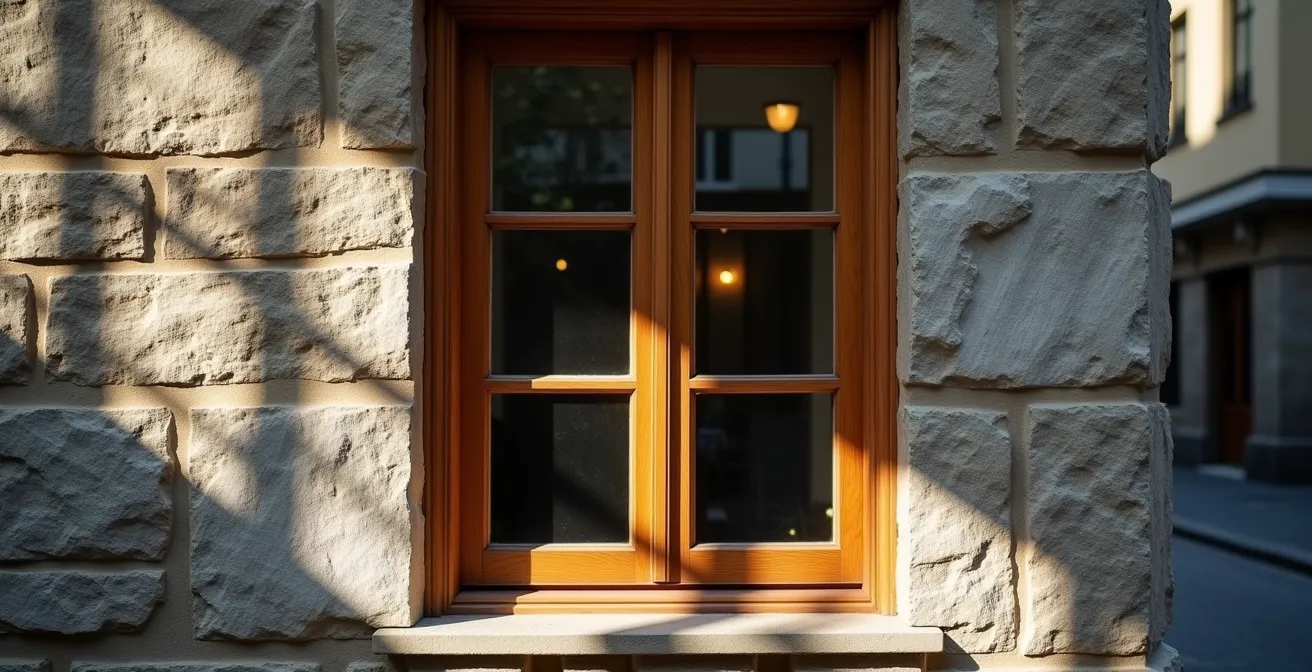
As a case study in navigating these rules, consider the common compromises now being accepted by many heritage committees. High-end fiberglass windows with realistic wood grain finishes are often approved as a lower-maintenance alternative to real wood. Furthermore, the issue of replicating a divided-lite pattern has evolved. Instead of true divided lites (which create multiple, inefficient small glass units), committees are increasingly approving Simulated Divided Lites (SDLs). These feature a single, large, efficient glass unit with grilles permanently applied to the interior and exterior surfaces, and often include a shadow spacer bar between the panes of glass. This creates a highly authentic look while preserving the thermal integrity of the window, a perfect marriage of history and performance.
How to Get a Renovation Permit Approved in a Heritage District Without Delays?
Securing a renovation permit in a heritage district is not a mere formality; it is a critical project phase that can lead to months of costly delays if mishandled. The Comité consultatif d’urbanisme (CCU) in your borough holds the authority to approve or reject your plans based on strict aesthetic and material guidelines. The key to a swift approval is not to fight the process, but to anticipate it with a meticulously prepared, professional submission. This is not the time to “ask for forgiveness later.”
s
The single most valuable piece of advice from heritage renovation specialists is to engage with your local urban planning department *before* you even get a quote from a window company. A pre-consultation meeting allows you to understand the specific requirements and unwritten preferences of your local CCU. This proactive step can save you from investing time and money in a window proposal that is destined for rejection. You will learn what materials are acceptable, what kind of divided lite patterns are preferred, and what documentation is required, allowing you to approach window suppliers with a clear, pre-approved brief.
Your official permit application must be flawless and comprehensive. It must leave no room for questions or ambiguity. It should be presented as a professional architectural submission, not a homeowner’s DIY request. A complete file is your best tool for avoiding back-and-forth communication and ensuring your project gets onto the CCU’s meeting agenda without being deferred. Your submission is your argument that you are a responsible steward of the building’s heritage, not just a renovator.
Action Plan: Your Heritage Permit Submission Checklist
- Material Collection: Prepare scaled architectural drawings of the proposed windows and gather physical material samples and manufacturer cut-sheets with technical specs.
- Site Documentation: Take high-resolution photos of the existing facade from multiple angles to provide full context for the review committee.
- Due Diligence: Document that you have explored options for restoring the existing windows first, explaining why replacement is necessary (e.g., irreparable rot, inability to meet energy targets).
- Formal Submission: Compile all documents into a complete, professional file and submit it to your borough’s Comité consultatif d’urbanisme (CCU) for review.
- Pre-emptive Consultation: Before all other steps, schedule a pre-consultation meeting with the urban planning department to understand their specific expectations and avoid common pitfalls.
The Blower Door Test: Why You Must Do It Before Touching a Single Wall?
The blower door test is one of the most critical and misunderstood steps in a major home renovation, especially one involving windows. It is an essential diagnostic tool that measures the airtightness of your entire home. Opting out of this test is like a doctor prescribing treatment without first taking your blood pressure. It is a mandatory requirement for accessing Quebec’s Rénoclimat grant program, and for good reason: it establishes the baseline performance of your building envelope system.
The test is conducted by an accredited energy advisor. A powerful, calibrated fan is mounted in the frame of an exterior door, temporarily depressurizing your house. As air from the outside is sucked in through every unsealed crack, gap, and penetration in your home’s envelope—around old windows, electrical outlets, recessed lighting, and foundation sills—the advisor uses diagnostic tools like smoke pencils or infrared cameras to pinpoint the exact locations of your major air leaks. The fan’s software calculates a precise metric for your home’s air leakage, usually expressed in Air Changes per Hour (ACH).
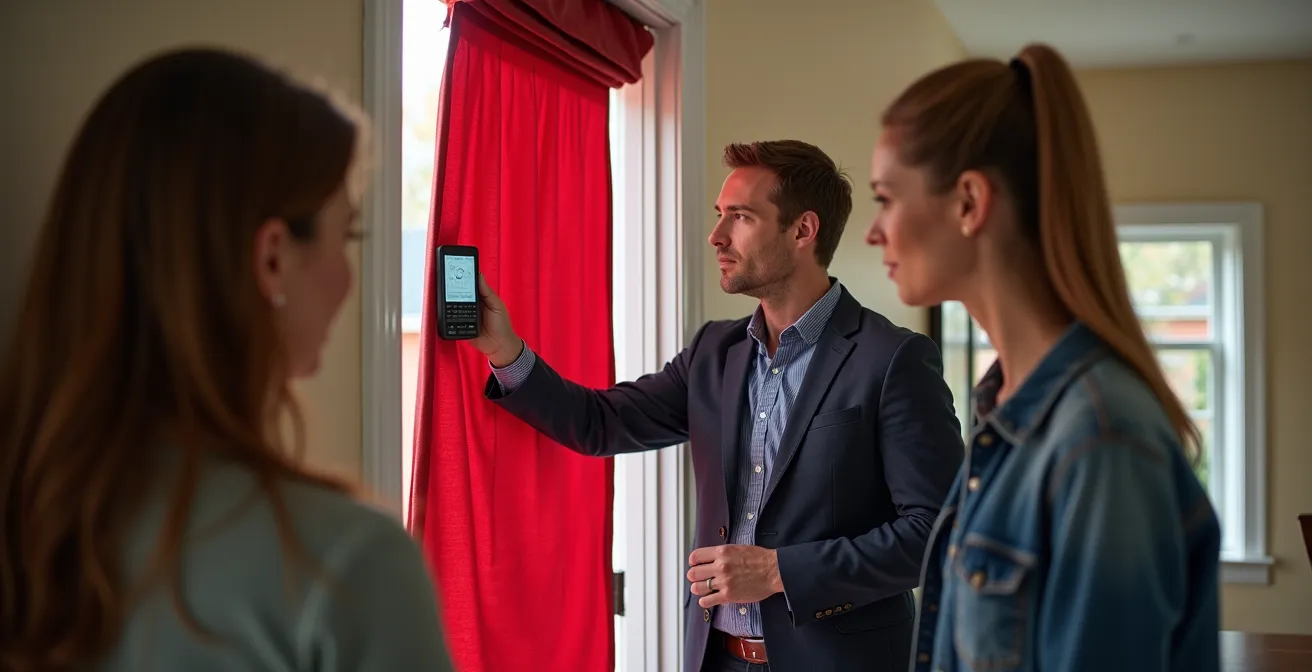
Performing this test *before* renovations begin is non-negotiable. It provides an objective, data-driven report card of your home’s current state. This pre-work evaluation gives you a roadmap, showing you where your biggest energy losses are. It may reveal that your drafty feeling is caused 50% by your old windows and 50% by a poorly sealed attic hatch. This allows you to allocate your renovation budget intelligently. After the work is complete, a post-work blower door test is performed. The performance delta—the measured reduction in air leakage between the two tests—is the undeniable proof that your investment in new windows and proper installation has paid off. This improvement is what unlocks your Rénoclimat grant payments.
Key Takeaways
- Your decision should be based on the window’s certified U-factor (1.22 W/m²K or less for Quebec grants), not just the number of glass panes.
- A “brick-to-brick” installation is non-negotiable. A cheaper “retrofit” installation can hide structural rot and will negate the performance of your new windows.
- Strategically stacking Quebec’s Rénoclimat program with the federal Canada Greener Homes Grant is the most effective way to finance a high-performance window upgrade.
Energy Efficiency in Quebec: How to Get MaPrimeRénov to Pay for Your Upgrades?
The high upfront cost of a quality window replacement project can be significantly offset by a strategy of grant synergy. Quebec homeowners are in a unique position to “stack” provincial and federal programs to make a high-performance upgrade financially accessible. Thinking of these programs as a simple rebate is a mistake; they are co-investment partners in your home’s energy efficiency. The key is to see them as a single, unified process, initiated by one crucial first step: the EnerGuide home evaluation.
The process begins by applying for a pre-renovation EnerGuide evaluation, which serves as the gateway to both Quebec’s Rénoclimat program and the federal Canada Greener Homes Initiative. An energy advisor will conduct a full assessment, including the mandatory blower door test, and provide you with a report. This report is your roadmap. You then proceed with the renovation, ensuring you hire an RBQ-licensed contractor and select ENERGY STAR certified windows that meet the program’s specific U-factor requirements. All work must typically be completed within 18 months of the initial evaluation.
Once the window replacement is complete, you schedule a post-renovation evaluation. The advisor will measure the improvement in your home’s airtightness and energy efficiency. This final report triggers the grant payments. You can receive funding from the federal program, which offers up to $250 per rough opening, up to a $5,000 maximum, in addition to the financial assistance from the provincial Rénoclimat program, which offers $150 per rough opening. For homeowners needing help with the initial outlay, the Canada Greener Homes Loan also offers up to $40,000 in interest-free financing. This multi-layered support system makes investing in a premium, long-lasting window system a smart and attainable financial strategy.
- Apply for a pre-renovation EnerGuide evaluation (this covers both federal and provincial programs).
- Get quotes for ENERGY STAR certified windows from RBQ-licensed contractors.
- Complete the window replacement work within the specified timeframe (usually 18 months).
- Schedule a post-renovation evaluation to calculate your home’s energy savings.
- Receive your combined grant payments from both the federal and provincial levels.
- Consider the Canada Greener Homes Loan for up to $40,000 in interest-free financing to cover upfront costs.
By approaching your window replacement as an engineered upgrade to your building envelope, you transform a daunting expense into a calculated investment. The right system, properly installed and verified, will deliver decades of comfort, lower energy bills, and a higher home value, with government programs helping to fund the journey.
Frequently Asked Questions About Window Replacement in Quebec
Why do I see moisture on the outside of my new triple-pane windows?
External condensation forms when the outer pane is so well insulated from interior heat that it cools below the dew point of humid morning air – this actually proves your windows are performing excellently.
Should I be concerned about interior condensation in winter?
Yes, interior condensation indicates either seal failure or excessive indoor humidity that needs management with proper ventilation like an HRV/ERV system.
How can I prevent condensation problems?
Maintain indoor humidity between 30-50% in winter, ensure proper ventilation, and choose windows with low U-factors for better thermal performance.